
IoT trends in smart buildings Connectivity AI and energy optimization

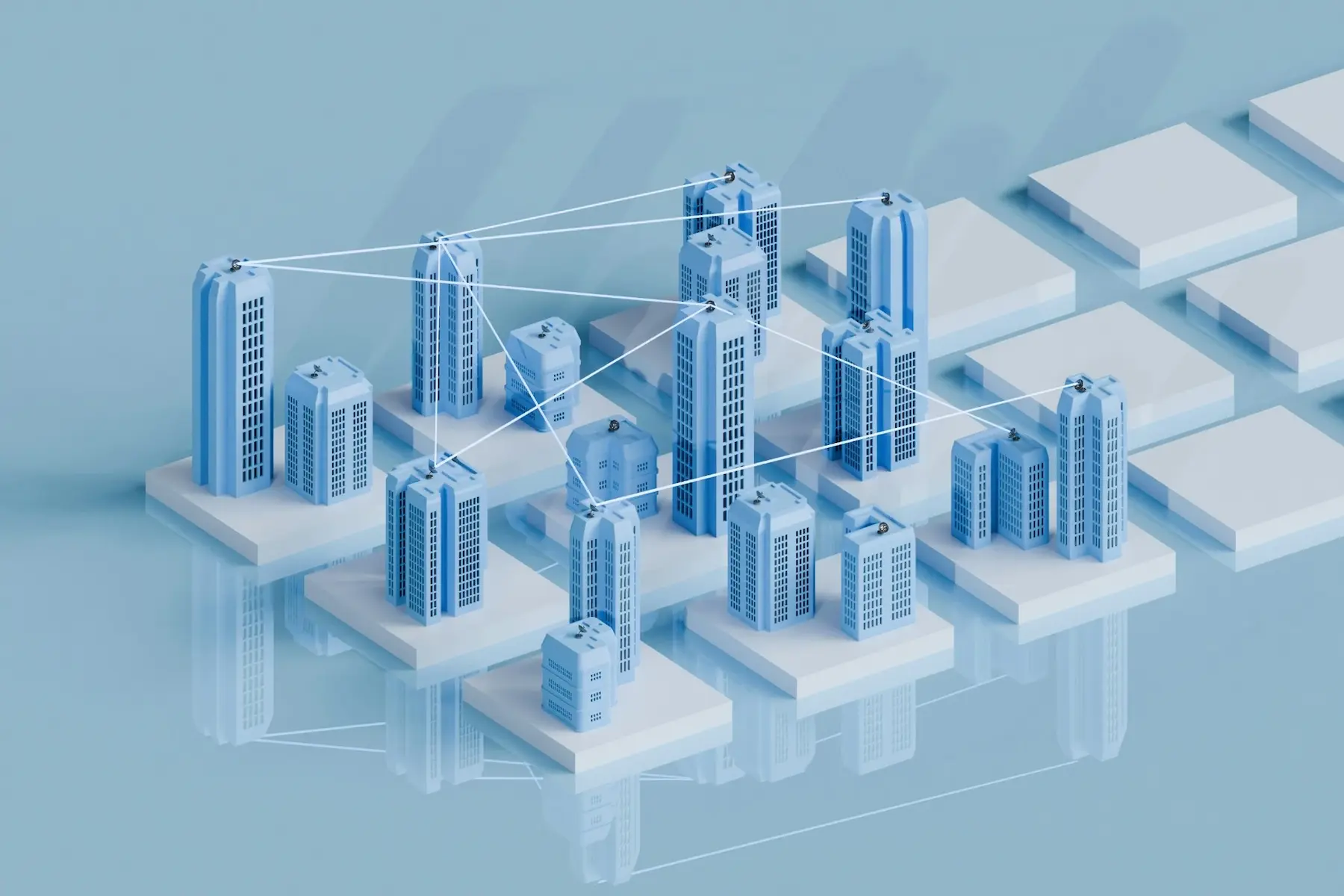
Building management is undergoing an unprecedented transformation. We are no longer talking about simple constructions with four walls and a roof, but rather about living ecosystems that think, learn and adapt to the needs of their occupants. IoT (Internet of Things) has turned each sensor, each luminaire and each air conditioning system into a data source that, well managed, can make the difference between a 20th century building and a truly intelligent one.
And the numbers speak for themselves: it is expected that by 2026 there will be more than 50 billion connected IoT devices around the world, and a significant part will be in our buildings. But the real revolution is not only in the number of devices, but in how artificial intelligence, edge computing and new communication networks are completely transforming the way these buildings operate. This digitalization of buildings to reduce energy consumption is already a reality that is completely changing the real estate sector.
Next, we are going to see the trends that are defining the present and immediate future of smart buildings.
Artificial intelligence applied to IoT
AI has stopped being science fiction to become the brain that makes sense of the millions of data points that IoT sensors generate every day. Imagine this: a modern office building can easily have more than 10,000 active data points. Temperature, humidity, presence, air quality, electricity consumption… Without artificial intelligence, having so much data is of no use: it would be like having a huge library in disarray in which it is impossible to find the book you need. This is where Big Data transforms infrastructure management radically.
But the objective is not only to organize that information, but to use it to act. This is where machine learning algorithms are revolutionizing the way buildings understand and respond to their occupants. Predictive analysis is no longer the future, it is the present. The systems learn the usage patterns of each space and anticipate needs before they arise. Is the meeting room on the third floor going to fill up in 30 minutes? The air conditioning system is already adjusting the temperature so that when attendees arrive, the environment is perfect. Not one degree more, not one less.
But where AI provides its greatest value is in continuous energy optimization. Algorithms analyze building behavior, weather conditions, energy prices and occupancy forecasts in real time to make decisions that previously required constant human intervention. A practical example: in summer, the system can pre-cool the building during hours of reduced electricity rates, storing “cold” in the mass of the building itself, and then maintain comfort during peak hours without triggering consumption.
Pattern-based automation goes far beyond simple schedules. The systems detect subtle anomalies that escape the human eye. A 5% increase in a pump’s consumption may seem insignificant, but AI identifies it as the first symptom of a problem that, without intervention, would result in a breakdown weeks later. This predictive maintenance capability is transforming the facility management model, allowing problems to be anticipated before they occur.
Now, all that intelligence loses meaning if the response is not immediate. Relying on a server that is hundreds of kilometers away creates a delay that, in critical situations, we cannot afford.
Edge computing and local data processing
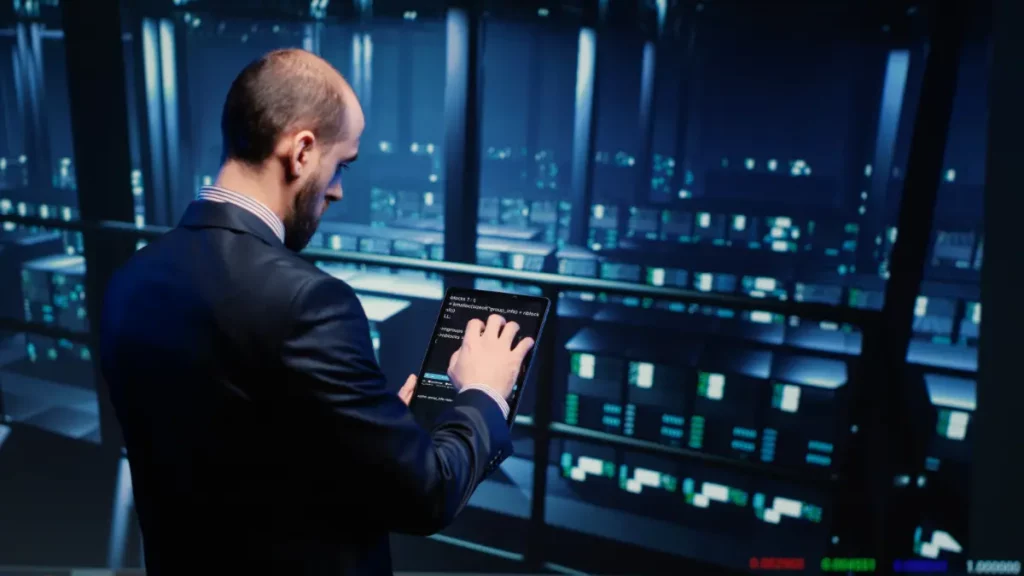
Although the cloud offers massive storage capacity, it has a physical weakness: distance. In critical situations, such as an emergency stop or a security alert, we cannot afford the delay involved in sending data to a server and waiting for a response.
Therefore, the current architecture is bringing intelligence back to the origin through Edge Computing. By processing critical information within the building itself instead of sending it outside, we not only eliminate latency, but we guarantee autonomy: if the internet connection fails (and we all know that happens), the building continues operating without interruptions.
And this is not all; The benefits go beyond speed. By processing data locally, you significantly reduce the necessary bandwidth and costs associated with cloud storage. A temperature sensor that takes readings every second generates a large amount of data over the course of a day. With edge computing, you only upload aggregate data and anomalies to the cloud, reducing traffic by more than 90%.
Security also wins. Sensitive building data does not have to travel over the Internet, minimizing the risks of interception. Critical decisions are made locally, meaning a cyberattack on central servers cannot paralyze basic building operations. It’s like having an autonomous brain in each floor that can function independently if necessary.
And then there is the energy efficiency of the processing itself. Moving data consumes energy, especially when we talk about the volumes generated by a modern building. Edge computing optimizes this flow, processing what is urgent locally and sending to the cloud only what is necessary for long-term analysis and advanced machine learning. This distributed architecture is essential to protect the health of customers and workers, allowing immediate responses to changes in Indoor Air Quality (IAQ) and other critical environmental conditions.
5G connectivity and smart sensor networks
On the other hand, we have 5G technology, which is not just for watching videos faster on your mobile. For smart buildings, it represents an exponential advance in connectivity capabilities. We are talking about speeds up to 100 times faster than 4G, but what is truly transformative is the ultra-low latency and the ability to manage a massive density of devices.
A modern smart building can have thousands of sensors and actuators operating simultaneously. With traditional networks, managing this traffic was like trying to clear a full stadium through a single door. 5G opens all the doors at once. Each device can communicate in real time without bottlenecks, enabling applications that were previously impossible. This is especially important when we talk about how IoT will improve the energy management of facilities.
The digital twins are the perfect example of what this new connectivity allows. Creating an exact virtual replica of a building requires updating thousands of parameters in real time. With 5G, the digital twin can reflect the state of the physical building with accuracy and synchronization that borders on instantaneousness. This opens up incredible possibilities for real-time simulation and optimization, whose practical applications we will see in detail later in this article
In addition, the integration between sensors, BMS systems (Building Management Systems) and energy management platforms reaches a new level. You no longer have islands of information that function separately. Everything is connected in an integrated ecosystem where information is transmitted in real time between systems. An occupancy sensor in the parking lot can communicate directly with the basement ventilation system, elevators and lighting, coordinating a response that optimizes consumption without compromising safety or comfort.
Interoperability and communication between IoT systems
One of the biggest headaches in smart buildings has always been the technological Tower of Babel. Each manufacturer with its protocol, each system speaking its language… The current trend towards real interoperability is changing this landscape radically. To better understand this ecosystem, it is essential to know what a building management system (BMS) is and how it works.
Open protocols such as BACnet, KNX, MQTT and Modbus are becoming the common language that ends the chaos. It no longer matters if your air conditioning system is from one brand and the sensors from another. With the right standards, everything can be communicated. This not only simplifies the initial installation, but frees you from being dependent on a single provider. Real competition benefits everyone.
Modern smart building solutions integrate this openness from the design. Integration platforms act as universal translators, allowing legacy systems to coexist with cutting-edge technology. That air conditioning system you installed 15 years ago can perfectly integrate with modern IoT sensors and benefit from current AI algorithms. building automation is precisely based on this capacity for intelligent integration.
Imagine being able to compare the energy performance of all your buildings in real time, identify best practices in one and automatically apply them to the rest. Interoperability makes this possible without having to replace entire systems.
In addition, by being able to choose the best components from each manufacturer and make them work together, you optimize your investment. You are not tied to the limitations or prices of a single closed ecosystem, which benefits the end user with better products and more competitive prices. In any case, the advantage of this open technology is not only financial; It is also the key to complying with new environmental demands.
IoT and sustainability
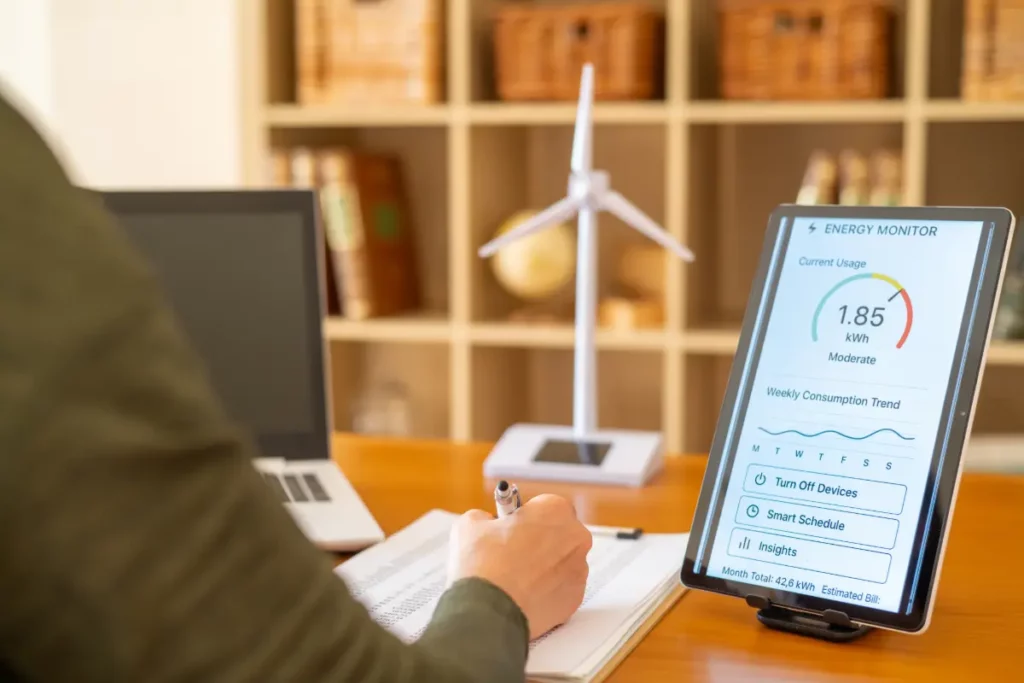
Sustainability has stopped being an optional extra and has become a business and social necessity. IoT is being essential for buildings to not only declare themselves sustainable, but also demonstrate it with irrefutable data. The indicators and systems to measure energy efficiency in a smart building are now more precise and accessible than ever.
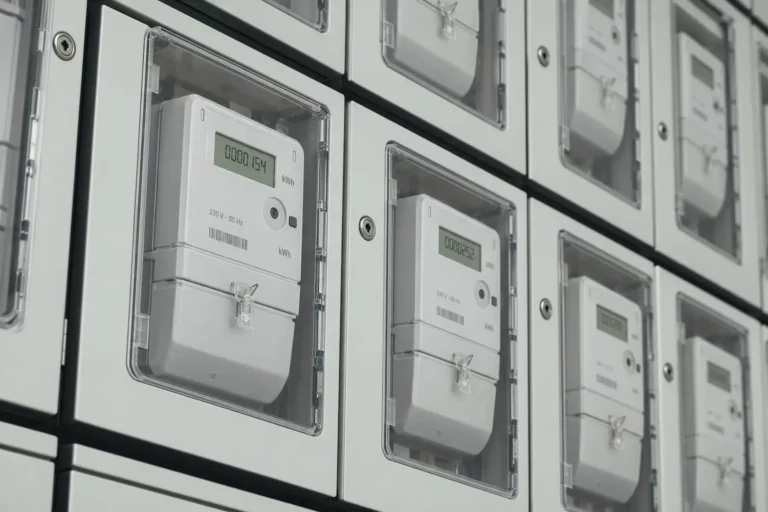
And accurate measurement is the first step towards real improvement. Modern IoT sensors are capable of accurately recording energy consumption. We are not just talking about knowing how much the building spends, but understanding exactly where, when and why each consumption occurs. This total transparency allows us to identify savings opportunities that, until now, remained hidden.
With this data, CO2 emissions are no longer a vague estimate based on invoices. IoT systems calculate the carbon footprint in real time, taking into account the energy mix at each moment. When the grid has more renewables, the building can intensify certain operations. When there are more fossil fuels, it reduces non-critical consumption. It is a constant synchronization with the electrical grid that optimizes both costs and emissions.
This data-based management is allowing efficiency improvements that seemed impossible a few years ago. Algorithms constantly learn and find new ways to reduce consumption without affecting comfort. The European Commission (EPBD Directive) estimates that a building can reduce its energy consumption between 20% and 40% just by optimizing the operation with smart building technology, without changing a single piece of equipment. This energy optimization in hotels using BACS systems is a perfect example of how technology can transform entire sectors.
Finally, obtaining environmental certifications such as LEED, BREEAM or WELL are no longer a bureaucratic ordeal. IoT systems automatically collect all the necessary information, generate the required reports, and maintain an auditable record of all metrics. Achieving and maintaining these certifications becomes a natural process, not an obstacle course.
However, having the entire building connected requires protecting that infrastructure to guarantee information security.
Cybersecurity and data management
The increase in connected devices requires order and control. Each IoT sensor is potentially a gateway for cyberattacks if not managed correctly. The industry is taking this very seriously, and current solutions integrate security by design, not as a later patch.
Network segmentation has become essential. IoT devices operate on separate VLANs, isolated from critical building systems and the corporate network. If a temperature sensor is compromised, it cannot jump to access control systems or company servers. It’s like having watertight compartments on a boat.
On the other hand, encryption in transit (end-to-end) is increasingly mandatory. All data must travel encrypted from the sensor to the management platform. Modern protocols include mutual authentication (two-way verification that both parties are authentic) and key rotation that blocks unauthorized access. Still, many existing deployments, especially legacy systems, still lack these measures.
In addition, continuous anomaly monitoring uses AI itself to detect suspicious behavior. If a sensor that normally sends data every minute suddenly starts transmitting every second, the system detects it immediately. If a device tries to communicate with an unknown server, it is automatically blocked. Security becomes proactive, not reactive.
Finally, managing the life cycle of IoT devices is another critical aspect. Automatic firmware updates, patching of vulnerabilities, safe removal of obsolete devices… Everything must be planned and automated to maintain the efficiency and security of the system.
And once we have the network protected, what is the next step?
The digital twin as an evolution of IoT

Digital twins represent the next step, the natural evolution of IoT in buildings. It is not just about collecting data, but creating a complete and functional virtual replica of the physical building that allows experimentation without risk. This technology is fundamental in the development of smart cities, where smart buildings are integrated into broader urban ecosystems.
Every change in the real building is reflected in its digital twin in almost real time, with just seconds of delay. But the fascinating thing about this technology is that you can make changes to the digital twin, simulate their effects and only apply them in the real world when you are sure of the results. It’s like having a flight simulator for your building.
Scenario simulation opens up infinite possibilities. What would happen if I change operating hours? What if I install solar panels on the roof? How would an extreme heat wave affect my systems? The digital twin gives you precise answers without risking anything. You can try a thousand different configurations until you find the optimal one.
The behavioral prediction reaches surprising levels of precision. The digital twin not only replicates the current state, but can project the future based on historical patterns and predictive models. You can anticipate when equipment will fail, how energy consumption will evolve, or what the impact of changes in occupancy will be. Projects such as Coruña Smart City with OTEA demonstrate the potential of these technologies applied at an urban scale.
The use of digital twins in building automation and space planning is revolutionizing the sector. Facility managers can visualize people flows, identify bottlenecks, optimize layouts… All in the secure environment of the digital twin before modifying anything in the real world.
The future is here
The trends we have explored in this post are not promises for a decade from now. They are realities that are transforming buildings right now. The union of IoT, artificial intelligence, edge computing, 5G and digital twins is creating buildings that are not only more efficient, but truly autonomous and predictive.
Therefore, the path to smart buildings is clearer than ever. Spaces that adapt to the needs of their occupants without them having to do anything. Systems that constantly self-optimize. Maintenance that anticipates problems. Efficiency and sustainability that are measured and improved in real time.
For professionals in the sector, the message is clear: these technologies are not optional. They are the foundation on which the future is being built, whether in the real estate, industrial or logistics sector. Buildings that do not evolve will become obsolete, not in decades, but in years. The good news is that the tools are here, they are accessible and the benefits are measurable from day one.
In short, IoT and its technologies allow any building to benefit from these innovations, adapting them to its needs and scale. It is not just about modernizing infrastructure, but about transforming the way we live, work and relate to the spaces we inhabit.
Recommended for you


You deserve a facility management system that works with you
Request a free demo and discover how other maintenance, sustainability, and energy efficiency teams are achieving real results. No unnecessary complexity. Just a clear roadmap designed to scale with you.



