
What is a smart building and how does it work

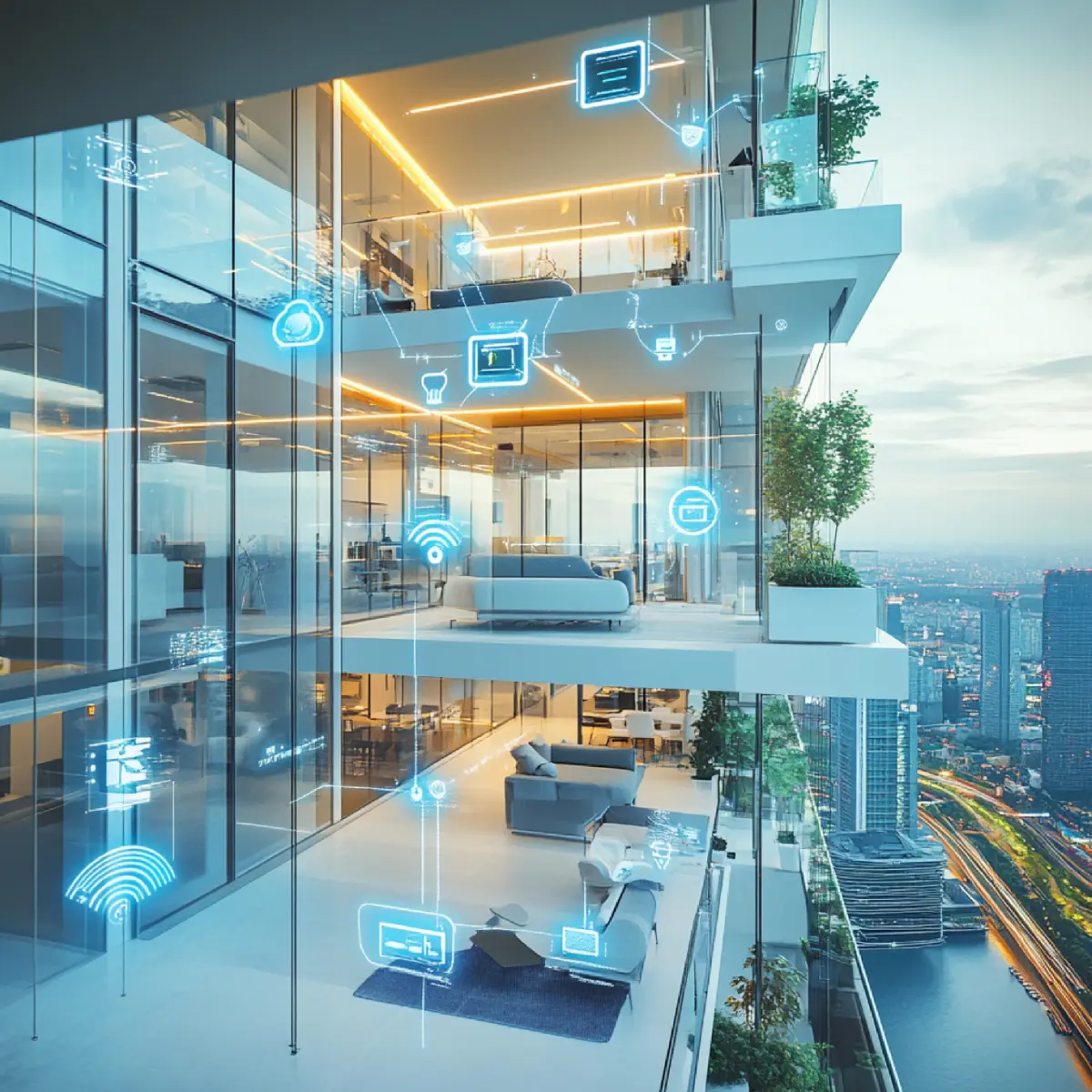
What is a smart building and how does it transform energy management
Surely you have heard about smart buildings. And it is normal, because with the skyrocketing energy bill, the increasingly present climate urgency and the need for more comfortable spaces, these constructions have stopped being a futuristic idea and have become a very real solution.
But what are they really? Let’s clarify something: a smart building is much more than an office with four sensors and automatic lights. We are talking about structures that integrate technology to monitor, analyze and control everything that happens inside them in real time. The truth is that they transform buildings, which stop being simple containers for people and become living ecosystems that adapt to us and, in the process, take care of the planet a little.
If you manage multiple establishments, are responsible for a company’s buildings or are in charge of the maintenance of large facilities, understanding well what a smart building is and what advantages it brings is essential to making decisions about digitalization and sustainability that are truly worthwhile.
What is a smart building?
A smart building is a construction equipped with advanced technology (IoT, BMS management systems, analysis platforms) that allows all its systems to be managed centrally and automatically. The difference with traditional buildings is clear: while in these each system works in isolation, in a smart building, everything is connected, shares information and is coordinated to guarantee greater efficiency, comfort and safety.
In addition, it is important to highlight that the new Energy Performance of Buildings Directive (EU) 2024/1725 already officially includes the concept and links it directly to the efficient use of energy, the integration of renewables and the exchange of data between interested parties. In fact, the directive itself announces that there will be an indicator to measure how prepared buildings are to use smart technologies and adapt their operation to real needs.
And although when we think of smart buildings, large offices, hospitals or hotels come to mind, the truth is that this technology is increasingly being applied to smaller buildings and even single-family homes. Therefore, what defines a smart building is not its size, it is its ability to operate through smart buildings technology using real-time data to automate and improve its operation, whether by adjusting air conditioning, lighting or general energy consumption.
Main features
What makes a building really smart? Let’s see the features that make the difference:
- Total interconnectivity: All spaces and systems are connected through a network through which information constantly flows. This connectivity is possible thanks to IoT, Big Data, Cloud Computing and Artificial Intelligence working together.
- Sensing everywhere: building sensors and meters are essential. They capture real-time data on temperature, humidity, air quality, occupancy, consumption… This comprehensive building automation using sensors provides the information that feeds all the system’s decisions.
- Automation that adapts: With all this information, smart building systems automatically adjust the operation of the equipment. If a meeting room is empty, the lights are turned off and the air conditioning is reduced. If the system knows it’s going to be very hot tomorrow, it starts cooling the building at night, when energy is cheaper.
- Single point control: A centralized management system (BMS) acts as the brain of the building. From there everything is monitored and controlled: air conditioning, lighting, consumption… A complete vision that facilitates decision making.
- Two-way communication: Smart buildings don’t just receive information. They can also communicate with external systems, users and the electrical grid, sharing data about their status and needs.
- Scalability to grow: smart building solutions are designed to evolve. When new technologies emerge or needs change, the building can adapt without having to start from scratch.
- Continuous improvement: Smart buildings constantly generate data about their use. This data is used to identify patterns, detect inefficiencies and continually improve. It is a continuous improvement process: the building learns from its own use to be a little more efficient every day.
How does a smart building work?
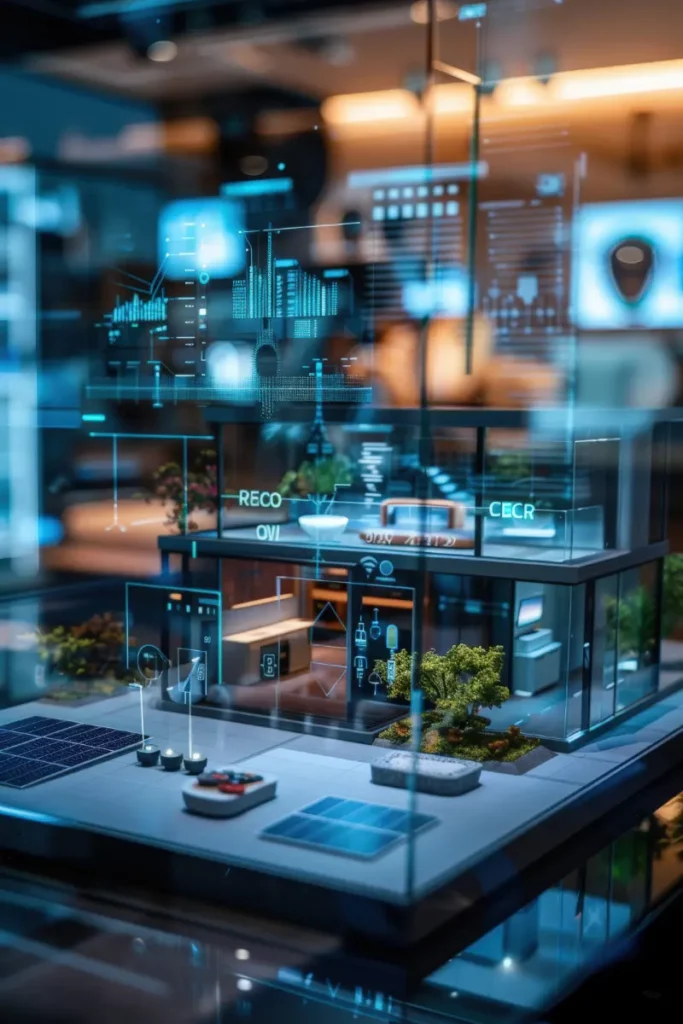
A smart building operates in a continuous cycle where the IoT devices are its senses, the analytics platform is its brain, and the automated systems are its ability to react and adapt to the environment. This cycle is made up of five phases:
- Strategic Sensing: The first thing is to install IoT devices throughout the building. Sensors for temperature, humidity, CO₂, occupancy, luminosity, electricity consumption, water and gas meters, motion detectors… Each one captures specific data and transmits it to the central system.
- Smart data collection: That data travels via Wi-Fi, Zigbee, LoRaWAN or cables to devices that aggregate and preprocess it. This communication layer ensures that information reaches a central point safely and quickly.
- Intelligent processing: The data reaches cloud platforms or edge computing systems where it is processed with artificial intelligence algorithms. The system identifies patterns, detects anomalies, compares with historical data and generates useful information for making decisions.
- Automatic action: With all this information processed, the BMS acts in real time. Adjust temperatures, regulate lighting, activate equipment, send maintenance alerts… All automatically to optimize efficiency and comfort.
- Constant learning: But it doesn’t end here. The system monitors the results of your decisions, learning from patterns and responses. Over time, the building improves its performance and finds new savings opportunities.
IoT technology applied to smart buildings
Since this entire intelligence cycle begins with data capture, it is essential to analyze the technology that makes it possible.
IoT technology is the key to developing next-generation smart buildings. Sensors, meters and IoT devices collect real-time information about virtually every aspect of the building.
In lighting, for example, brightness and presence sensors allow the lights to be adjusted according to natural light and room occupancy. The most advanced systems even adapt the color temperature depending on the time of day. The result? Up to 60% less electricity consumption in lighting.
For air conditioning, temperature and humidity sensors constantly monitor conditions. HVAC systems adjust dynamically, providing air conditioning only where needed and adapting to user preferences and the weather outside. Here we are talking about reductions of up to 45% in consumption.
Smart meters give you a complete view of the energy consumption of each system, each floor or even each machine. This information allows you to identify saving opportunities and detect anomalies that may indicate breakdowns.
And then there are occupancy sensors, which tell us how spaces are actually used. With this data you can optimize the distribution, schedule cleaning efficiently and adjust all systems according to actual occupancy.
Last but not least, air quality sensors monitor CO₂, volatile organic compounds, particles… After the pandemic, we have all learned that indoor air quality is non-negotiable.
BMS and building automation systems
For this network of sensors to work in a coordinated manner, a central brain is needed to manage all the information.
The Building Management Systems (BMS) also known as Building Automation Control (BAC) or Technical Management and Control (GTC), are the operational heart of the intelligent building and consist of a computer system that controls and automates all elements of the property.
How does a BMS work? Well, it uses sensors to collect data on temperature, humidity, movement, light, consumption… For everything to communicate, it uses protocols such as DALI for lighting, or Modbus, BACnet and OPC UA for other systems. With all this information, the BMS controls the systems through actuators, controllers and valves. And with predefined parameters, make decisions in real time.
This is where we must differentiate between building automation and home automation. building automation focuses on buildings for tertiary or industrial use (offices, hotels, shopping centers) where systems must coordinate multiple subsystems and manage large volumes of data. Home automation focuses on the domestic sphere. If you want to delve into the differences between home automation and building automation, you will see that building automation integrates home automation into a much more complex structure.
Energy management platforms
While a BMS is the ideal solution for a single building, what happens when you need to manage an entire portfolio of properties centrally?
Beyond traditional BMSs, Energy Management Platforms (EMS) and EMOS systems (Energy Management and Optimization System) represent the most advanced evolution in intelligent management.
An EMS is a flexible ecosystem that combines IoT, Big Data and AI to convert data into useful information. Unlike a BMS that manages one facility, an EMS platform can centralize multiple buildings, chain stores or industrial warehouses. facility management teams can work remotely, centralized and agile.
With an EMS you can automate tasks, start machines remotely, simulate electricity bills, make predictions or detect breakdowns quickly. And the best: it integrates with everything. Native apps, SCADA, ERP, CRM, CMMS, programmable controllers and any IoT device regardless of brand or protocol.
EMOS go one step further. They are a fully integrated solution with very advanced optimization capabilities. The special thing is that they respond to the objectives of each department: from energy managers and maintenance teams, to CSR departments focused on decarbonization and purchasing managers seeking efficient management of available resources.
Advantages of a smart building

Okay, this all sounds great, but in practice, what are the advantages of a smart building?
- Real energy efficiency: Smart buildings consume resources only when they need them. With automation systems, intelligent control based on real data and IoT sensors, they can reduce global consumption between 10% and 30%, according to data from the International Energy Agency (IEA).In lighting, savings can reach 40% with efficient systems, reaching up to 60-75% when combining LEDs with regulation and control systems, according to the technical guides of the Institute for Energy Diversification and Saving (IDAE). The technology allows to measure energy efficiency accurately and continuously.
- Lower operating costs: Automating and maintaining the building in a predictive way helps reduce expenses without complications. Intelligent systems allow only what is necessary to be consumed and, by being able to anticipate failures, unexpected repairs are avoided. Thus, the budget allocated to maintenance can be reduced between 10% and 30%, according to studies by the Spanish Maintenance Association (AEM), and peace of mind is gained.
- Anticipated maintenance: IoT sensors are aware of any change: vibrations, temperature, pressure, wear. With all this information, the building detects possible failures before they become a breakdown. Reviews are scheduled right when they are due, avoiding surprises and ensuring that everything runs more stable.
- Comfort that is noticeable: Lighting that adapts to natural light, personalized climate control by zones, quality air, controlled acoustics… Occupants are more satisfied, and in work environments productivity can increase up to 30%, according to research by the Smart Building Collective and European studies of smart buildings.
- Reinforced security: Access control, real-time monitoring, protection when the building is empty, detection of fires, leaks, intrusions… All monitored by sensors distributed throughout the building.
- Value that adds: An efficient and technological building is more attractive to buyers and tenants, which increases its value in the market.
Smart building and sustainability
On the other hand, we cannot talk about smart buildings without talking about sustainability. They are a fundamental piece to achieve decarbonization objectives and comply with European regulations.
The technology behind a smart building seeks real sustainability: energy efficiency, adequate management of resources, reduction of pollution and waste, well-being and safety of the occupants. With all their systems optimizing consumption, smart buildings can reduce their carbon footprint while lowering costs.
The European Directive establishes that smart buildings must incorporate a readiness indicator for intelligent applications. This indicator will allow you to better understand the value of automation and electronic supervision.
Smart buildings make it easier to obtain LEED, BREEAM and VERDE certifications. These certifications evaluate energy efficiency, sustainable materials, water management, environmental quality and emissions reduction.
They also facilitate compliance with regulations such as CAEs (Energy Savings Certificates) and the TER050 factsheet for energy monitoring and optimization. And they connect with urban automation, which extends these principles to the entire urban environment, optimizing resources at the city scale.
Problems in the implementation of smart buildings
Now, let’s be honest. Transforming a building into a smart building is not a simple task and some obstacles must be taken into account.
- The initial investment: To transform a conventional building it is necessary to invest in hardware, software, networks and training. According to (EU-BAC/KNX/consulting companies) we are talking about a range of €28-70/m² for basic automation. However, savings in operation, energy and maintenance allow the investment to be recovered in approximately 3-5 years.
- System interoperability: Getting devices from different manufacturers to work together is one of the biggest challenges. The solution uses open platforms, BACS systems with multi-protocol integration and flexible APIs.
- Cybersecurity: Connected buildings can be vulnerable to cyberattacks. Multi-factor authentication, communications encryption, network segmentation, threat monitoring and regular updates must be implemented.
- Data management: Smart buildings generate large volumes of data that must be stored, processed and managed appropriately. Furthermore, if the data is incorrect, wrong decisions are made. Robust validation, regular sensor calibration, and compliance with privacy regulations are needed.
- Lack of qualified personnel: Implementing and managing smart buildings requires professionals specialized in IoT, BMS, data analysis, cybersecurity… There is currently a shortage of qualified personnel.
The future of smart buildings
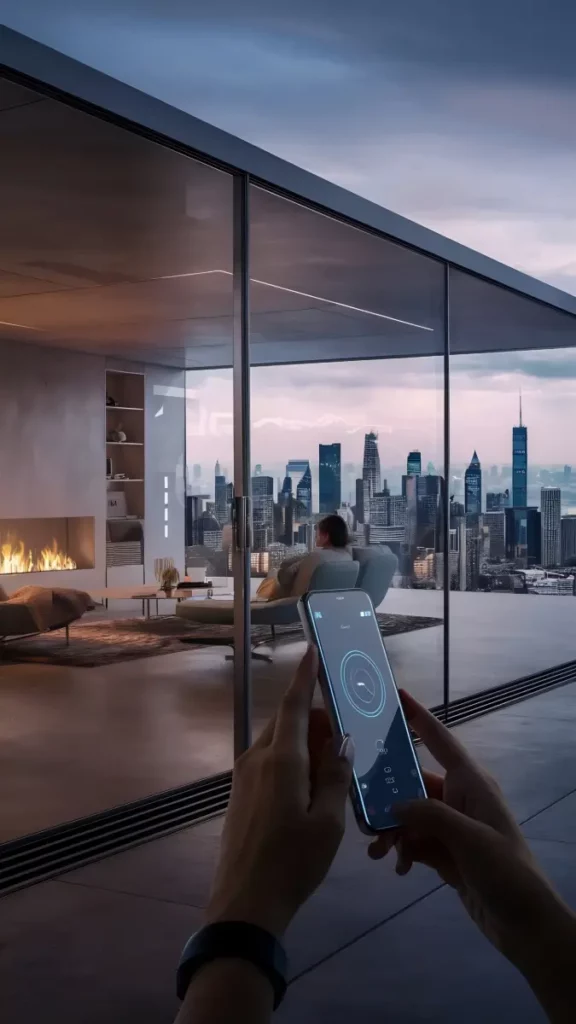
What awaits us? The sector is evolving rapidly with trends that will further expand capabilities:
AI will take buildings to the next level: they will not just react, they will predict and proactively adapt. AI will autonomously optimize, anticipate behaviors and make decisions without human intervention.
Digital Twins will be standard: complete virtual representations that allow simulation and optimization in real time. You will be able to test scenarios, optimize designs and make better decisions based on real data.
5G and Edge Computing will change the rules: ultra-low latency and real-time decisions right in the building. This will enable applications that require immediate responses.
Net zero energy buildings: using IoT for energy management, they will regulate consumption, integrate renewables and participate in energy markets. They will be fundamental pieces of the Smart Cities of the future.
OTEA, the platform that promotes intelligent building management
Finally, at this point the question is inevitable: how is a conventional building transformed into a smart building?
The answer lies in the implementation of a comprehensive asset and energy management platform, and that is where OTEA becomes your perfect ally.
OTEA goes beyond a traditional BMS: it is a complete ecosystem that combines IoT, Big Data and artificial intelligence to turn data into high-impact operational decisions. Reduce expenses, get ahead of breakdowns and minimize your environmental footprint. The platform is designed for energy managers, facility managers, large asset portfolios and companies with multiple locations that need to centralize everything from a single interface.
What differentiates OTEA from other systems is that it manages multiple installations at the same time. It integrates with different tools through open APIs. You can connect native applications, SCADA, ERP, CRM, CMMS, PLCs and any IoT device regardless of the brand or protocol (Modbus, MQTT, BACnet, OPC UA).
Why choose OTEA?
The platform offers real-time energy monitoring with detailed visibility by installation, area or equipment. Automate tasks and allow remote start without traveling. In addition, it includes predictive maintenance that detects anomalies by calculating IoT data, an electricity bill simulator to anticipate consumption and costs, management of photovoltaic self-consumption optimizing the balance, comparative analysis between establishments to copy best practices and automated reports with customizable panels.
In addition, OTEA complies with the strictest cybersecurity standards and is ISO 27001 certified. It also facilitates compliance with regulations, sustainability certifications and ESG reporting through automated collection and reporting.
The results speak for themselves: Lupa saved more than 2.6 million kWh and reduced 643,169 kg of CO₂ in the first year. Saltoki digitized its photovoltaic plants, certifying CO₂-free production.
Are you looking to transform your buildings into intelligent buildings, capable of monitoring and acting on their operation, learning from their data and continuously optimizing their consumption? IoT, BMS, EMS and EMOS technologies are essential, but you need a platform that integrates them all. OTEA is the platform that connects technology, data and people to make the intelligent building management of the future a reality.
Recommended for you



You deserve a facility management system that works with you
Request a free demo and discover how other maintenance, sustainability, and energy efficiency teams are achieving real results. No unnecessary complexity. Just a clear roadmap designed to scale with you.



