
What is an energy management system and how does it work

Are you concerned about the environmental impact of your company? Do you want to reduce your ecological footprint but don’t know where to start? An Energy Management System (EMS) may be the answer.
An Energy Management System (EMS) is like an “action plan” that helps
companies control and reduce their impact on the environment. It is not just a pile of documents kept in a drawer, but an organized way of working that integrates environmental care into all the company’s activities.
The ISO 14001 standard is the most used international standard to implement an EMS. It is like a “recipe” that guides you step by step to develop an effective system that complies with legislation and continually improves your environmental management.
Next, we will explain in a clear and simple way the elements that make up an EMS, how to implement it in your organization and what benefits it can bring you, both for the planet and for your bottom line.
Essential elements of an EMS
For an Energy Management System to really work (and not just be paperwork), you need several key ingredients. Think of it like a recipe: if any element is missing,
the result will not be as expected.
Environmental policy and leadership
Everything starts with a clear commitment. It’s like when you decide to get in shape: if you’re not really committed, you’ll give up at the first difficulty.
The environmental policy is a public statement where the company says: “We care about the environment and we are going to do something about it.” It must be signed by management and be known by all employees.
Leadership is essential: if bosses don’t take it seriously, why would others?
Managers must lead by example, allocate resources and show that this is not just a fad.
Evaluation of environmental aspects and impacts
Before solving a problem, you have to know what it is. This phase consists of identifying how your company affects the environment:
- How much water or energy do you consume?
- What waste do you generate?
- Do you emit polluting gases?
- Do you use dangerous substances?
It’s like doing an “environmental checkup” of your company. With this information, you can
determine which aspects are most important and require priority attention.
Planning and definition of objectives
With the problems identified, it is time to set concrete goals. It is not enough to say “we want to pollute less”; you need clear objectives that you can measure:
- Reduce water consumption by 15% in one year
- Reduce plastic waste by 25% in six months
- Replace 30% of the fleet with electric vehicles
Each objective must have a detailed plan: who is in charge, what resources you need, when it must be ready and how you will measure if you have achieved it.
Implementation and operation
This is the “get to work” phase. It is not enough to plan; actions must be put into practice:
- Train staff (do they know how to properly separate waste?)
- Establish clear procedures (what to do with used oils?)
- Prepare for emergencies (what if there is a chemical spill?)
- Keep records of everything important
The key is to incorporate these practices into your daily life, until they become habits for all employees.
Monitoring, measurement and continuous improvement
An EMS is not something you implement and forget. You need to regularly check if it is working:
- Measure key indicators (consumption, waste, emissions…)
- Perform internal audits to verify compliance
- Fix what doesn’t work
- Constantly look for ways to improve
This cycle of improvement (plan, do, check, act) is what keeps the system alive and operational.
An efficient EMS combines commitment, analysis, planning, action and monitoring in a continuous cycle that helps you better manage your company’s environmental impact.
Advantages of implementing an EMS in your company
Implementing an Energy Management System is not just about “doing the right thing” for the planet; It also has many practical benefits for your business:
- Reduced environmental impact: Less pollution, less waste and better use of resources. Your company leaves a smaller footprint on the planet.
- Real economic savings: Using less energy, water or raw materials directly translates into lower bills. Many companies recover the investment in their EMS only by saving resources.
- Smooth legal compliance: Environmental legislation is becoming stricter. An EMS helps you stay up to date and avoid fines or sanctions that can be very high.
- More efficient processes: When analyzing your operations from an environmental perspective, you often discover inefficiencies that, when corrected, improve the entire operation.
- Better image and reputation: Customers increasingly value companies committed to the environment. A certified EMS is proof that you are not doing greenwashing.
- Competitive advantage in tenders: Many public and private tenders score positively or even require Energy Management Systems.
- Access to new markets: Some clients or international markets look for suppliers with environmental certifications.
- More motivated employees: People prefer to work for companies that care about the planet. An EMS can improve the work environment and environmental awareness.
- Innovation and continuous improvement: The process of seeking more sustainable alternatives often leads to innovative solutions that benefit the entire company.
- Preparing for the future: Environmental demands are only going to increase. An EMS puts you one step ahead of regulation and market trends.
The benefits are especially evident in sectors with high environmental impact, such as the manufacturing industry, construction or food. But even service companies can obtain important advantages, especially in terms of image and energy efficiency.
Implementing an EMS not only benefits the environment, but also improves your business in many aspects: you reduce costs, improve your image, comply with laws and make your company more efficient.
What environmental problems does an EMS address?
A well-implemented Energy Management System helps you overcome multiple environmental challenges:
- Air pollution: Control of emissions of gases and polluting particles. From a small boiler to a large industrial chimney, everything adds up.
- Water pollution: Management of discharges and protection of water resources. Do you know what substances your wastewater contains?
- Waste generation: Application of the waste hierarchy: first reduce, then reuse and finally recycle. The best waste is the one that is not produced.
- Inefficient consumption of resources: Optimization of the use of raw materials, water and energy. We often spend more than necessary due to lack of control.
- Improper handling of chemical products: Control in the storage, use and disposal of dangerous substances. A small spill can cause a big problem.
- Energy waste: Implementation of energy efficiency measures and use of renewable energy. The cleanest energy is the one that is not consumed.
- Impact on ecosystems: Protection of biodiversity in areas affected by business activity. Each species has its role in the natural balance.
- High carbon footprint: Reduction of greenhouse gas emissions, contributing to the fight against climate change.
Each company, depending on its sector and size, will have to focus on the most important aspects for its activity. An office will prioritize energy consumption and recycling, while a factory will have to pay more attention to emissions, discharges and hazardous waste.
Environmental problems and practical solutions
Here are some of the most common problems you can address with your EMS, along with practical solutions and the real benefits you will get:
| Problem | Impact on the company | Practical solutions | Benefit |
|---|---|---|---|
| High energy consumption | High bills, larger carbon footprint | Energy audit, lighting LED, BACS systems, AI to optimize renewables | Savings of 10-30% on electricity bills |
| Excess waste | Management costs, space problems | Reduction at source, separation, composting | Less management expenses, possible income from recovery |
| Excessive use of water | High costs, risk of restrictions | Reuse systems, efficient taps, leak detection | 15-40% reduction in consumption |
| Polluting emissions | Legal risk, image negative | Filters, alternative fuels, process optimization | Legal compliance, better relationship with the local community |
| Dangerous chemical products | Occupational risks, costly waste management | Substitution with alternatives, optimization of quantities | Lower cost in PPE and management, more work environment safe |
A well-structured EMS allows you to address the main environmental problems in an organized way, adapting solutions to what your company really needs.
Steps to implement an EMS in the company
Implementing an Energy Management System may seem complicated, but if you break it down into manageable steps, it becomes much simpler:
- Initial diagnosis: First, take a “photo” of the current situation. How is your company doing in environmental terms? Do you comply with the legislation? It’s like weighing yourself before starting a diet: you need to know where you’re starting from.
- Management commitment: Make sure bosses are really committed. Without your support, the project may remain in the air. Obviously, you will need resources, time and support for the changes.
- Identification of environmental aspects: Analyze all your activities to see how they affect the environment. From paper consumption in offices to machine emissions. Everything counts.
- Legal requirements: Identify which environmental laws and regulations affect your activity. Legislation is constantly changing, so stay up to date.
- Objectives and programs: Establish clear goals and plans to achieve them. Don’t try to fix everything at once; Prioritize what is most important or what can give you “quick wins.”
- Resources and responsibilities: Defines who does what. You need people responsible for each task and the means to carry them out.
- Training and awareness: Make sure everyone understands their role. From the CEO to the cleaning staff, everyone contributes to the company’s environmental performance.
- System documentation: Create the necessary procedures, but without going overboard. Documentation must be practical and functional.
- Operational control: Establishes methods to correctly manage activities with environmental impact. For example, procedures for waste management or equipment maintenance.
- Monitoring and measurement: Implement indicators to know if you are making progress. You can’t improve what you can’t measure.
- Internal audit: Periodically check if the system works as it should. It’s like a regular medical checkup for your EMS.
- Management review: Managers must analyze the results and make decisions to improve. It is time to adjust course if necessary.
- Certification (optional): If you want official recognition, you can certify your EMS according to the ISO 14001 standard. An external auditor will verify that you meet all the requirements.
Remember that an EMS is not a project with an end, but rather a continuous improvement process. There will always be something you can do better.
The implementation of an EMS requires that the entire company gets involved and that concern for the environment becomes part of your culture.
Technological tools that support environmental management
Technology can be your best ally to implement and maintain an effective EMS. These are some tools that can make your work easier:
- Software specialized in environmental management: There are programs designed to manage all aspects of an EMS. They help you centralize documentation, control indicators and receive legal compliance alerts.
- Real-time monitoring systems: Sensors and IoT devices (capable of collecting data and connecting to the Internet) that continuously measure key environmental parameters. It’s like having an “ambient thermometer” that never sleeps.
- Sustainability reporting platforms: They facilitate the preparation of environmental reports according to standards such as GRI, which comply with the Sustainable Development Goals.
- Building automation systems: BACS (Building Automation and Control Systems) solutions optimize energy consumption and reduce the environmental impact of facilities.
- Carbon footprint calculation tools: They allow you to measure, analyze and reduce your organization’s greenhouse gas emissions.
- Apps for waste management: They facilitate the correct separation, monitoring and documentation of the waste generated.
- Circular economy platforms: They connect companies to use their waste as resources for others.
Technological tools according to EMS phase
For each stage of your EMS, there are digital tools that can make your life easier. This table shows you the most useful ones depending on what you need at any given time:
| EMS phase | Recommended tools | Benefits |
|---|---|---|
| Environmental diagnosis | Software for analysis of environmental aspects, digital checklist | Systematic evaluation, identification of priorities |
| Operational control | IoT sensors, BACS systems, mobile applications | Automated control with real-time action rules |
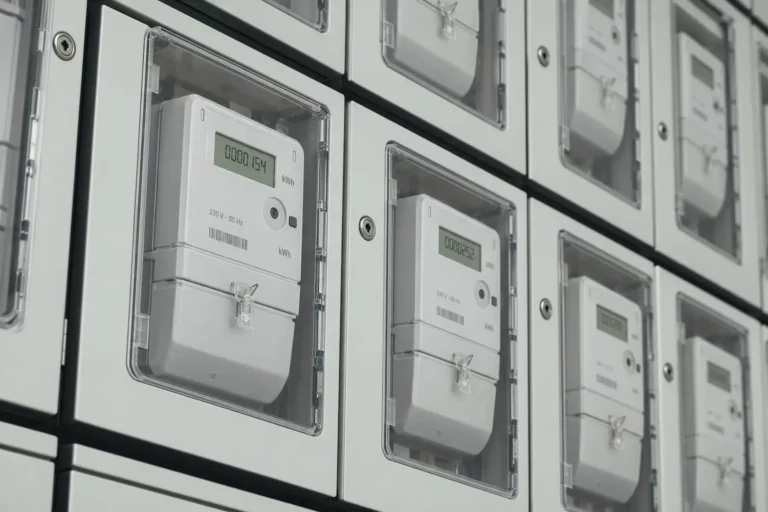
| Consumption monitoring | Platforms such as OTEA, smart meters | Data visualization, detection of anomalies |
| Document management | Document management software, cloud systems | Centralization, easy access, version control |
| Legal compliance | Regulatory update platforms | Alerts of legal changes, evaluation of compliance |
| Reporting and communication | Infographic tools, interactive dashboards | Visual reports, effective communication of results |
| Training | E-learning platforms, simulators | Continuous training, monitoring progress |
In addition to the software platforms for the comprehensive management of an EMS, there are other technological tools that can help you achieve your environmental objectives. One of these tools is OTEA.
OTEA, although not a complete Energy Management System, can contribute to your sustainability strategy. This platform allows you to:
- Monitor your energy consumption in real time and detect inefficiencies
- Set automatic alerts that tell you when something is wrong
- Act automatically if inefficiencies are detected
- Manage systems remotely individually or in bulk
- Document and verify your energy savings to obtain Energy Savings Certificates (CAEs)
- Implement automation measures in accordance with TER050 factsheet to save energy
- Generate reports to demonstrate that you are meeting your environmental objectives
The best thing about these tools is that they simplify environmental management, making it simpler and more accessible. OTEA integrates via API with your environmental management tools so you don’t have to download data from 50 different platforms. You no longer need to be an expert to keep track of your company’s environmental impact.
Does your company already have an Energy Management System? If you are considering implementing it or are looking for tools to improve your environmental management, contact us to discover how OTEA can help you make your activity more sustainable and efficient.
Recommended for you

You deserve a facility management system that works with you
Request a free demo and discover how other maintenance, sustainability, and energy efficiency teams are achieving real results. No unnecessary complexity. Just a clear roadmap designed to scale with you.



