
What are the Sustainable Development Goals

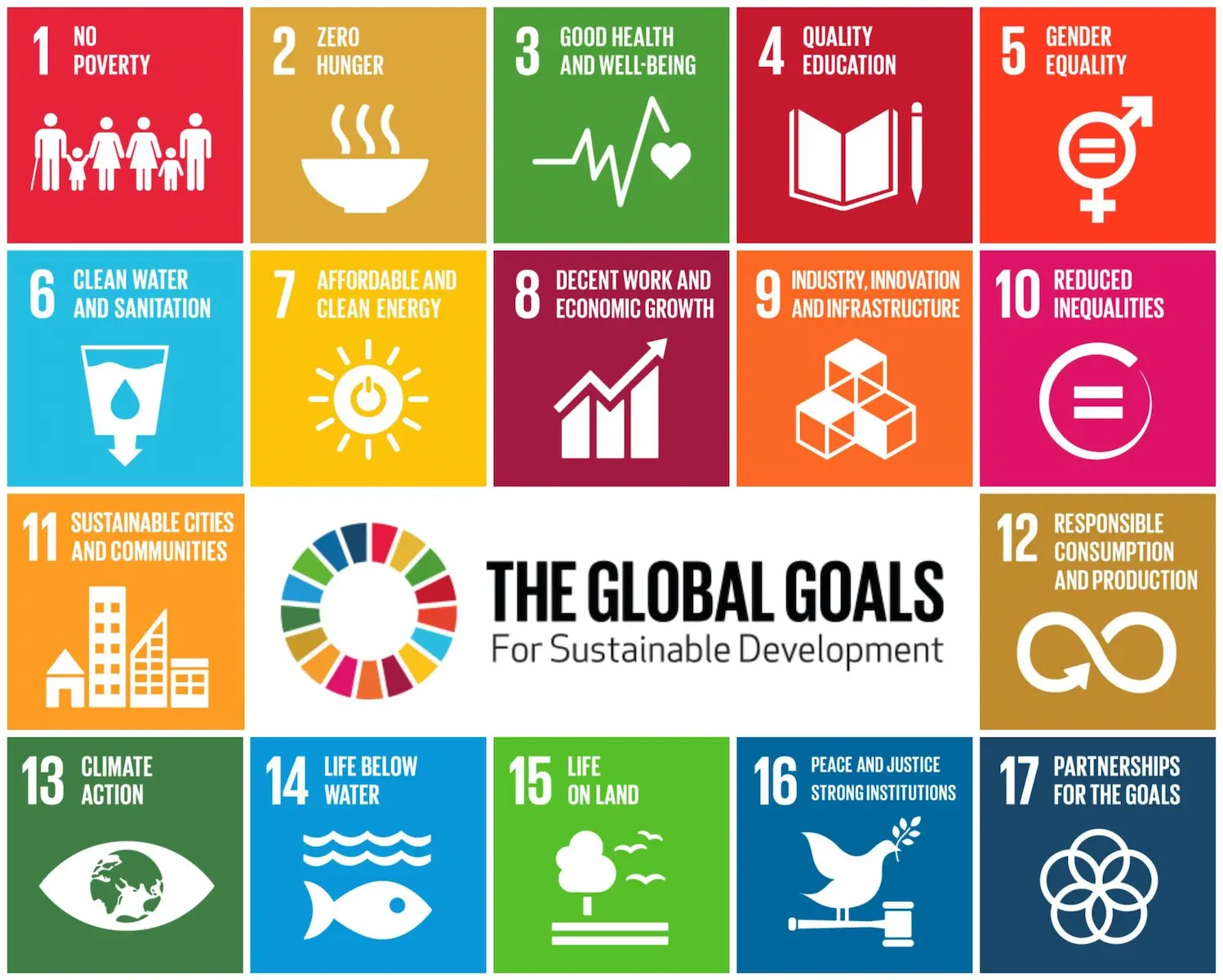
Surely you have heard about the SDGs: they appear in sustainability reports, in corporate strategies, in investment reports. But do you really know what they are and why you should care if you manage a company or organization?
The Sustainable Development Goals are 17 global goals agreed upon by the United Nations in 2015 to build a more just, prosperous and planet-friendly world. They are not just good intentions: the SDGs define the future of public policies and investments. If you want your company to remain competitive and relevant, you need to integrate these objectives into your business model.
What are the SDGs?
The SDGs are a global action plan to transform the way we produce, consume and relate to the planet and each other. Its objective: protect biodiversity, build more just societies and eradicate poverty in all its forms.
They were born on September 25, 2015, when the 193 UN Member States approved these 17 objectives as part of the 2030 Agenda, with the horizon set for the year 2030 for their fulfillment. Although progress has been uneven, they continue to set the global roadmap for the coming years.
The SDGs took over from the Millennium Development Goals (MDGs), which were in force between 2000 and 2015. But there is an important difference: while the MDGs were designed mainly between governments, the SDGs were built with contributions from scientists, academics, companies and citizens around the world. Their development began at the Rio+20 Conference of 2012 and they officially came into force on January 1, 2016.
What is the 2030 Agenda?
The 2030 Agenda is the general framework in which the SDGs are included. It is, basically, a global pact to promote the well-being of people, take care of the planet and guarantee economic prosperity for all. It also seeks to strengthen peace and guarantee equitable access to justice.
The 193 States that signed it recognized something key: without eliminating poverty and reducing inequalities, no sustainable development is possible. That is why the 2030 Agenda is not limited to environmental issues: it covers the economic, social and environmental issues in an integrated way.
In total, the 17 Goals include 169 specific targets that are interconnected. You can’t advance one while ignoring the others. For example, you cannot achieve sustainable cities (SDG 11) without ensuring clean energy (SDG 7) and clean water (SDG 6). Everything is connected.
And this is where companies come in. States committed to mobilizing resources and creating alliances, with special attention to the most vulnerable people. But it is clear that without the active involvement of the private sector, meeting these objectives is impossible. That is why the sustainable development of companies and the sustainable economy are fundamental pillars of the 2030 Agenda.
What are the 17 sustainable development goals?
Let’s see one by one what each objective pursues and how to apply it to your corporate reality.
SDG 1. No Poverty
Goal 1: End poverty in all its forms everywhere
700 Million people survive on less than $1.90 a day. 10% of the world’s population lives in extreme poverty.
The goal for 2030 is to guarantee that all people, especially the most vulnerable, have access to basic economic resources: health, education, decent housing. It also involves creating legal frameworks that support inclusive economic policies. If your company operates in developing countries or has global supply chains, this objective affects you directly.
SDG 2. Zero hunger
Goal 2: End hunger, achieve food security and improved nutrition and promote sustainable agriculture
One in nine people in the world is undernourished. The goal is to end hunger and ensure that all people have access to sufficient and nutritious food all year round.
In addition, it seeks to promote sustainable agriculture, protecting the genetic diversity of seeds, plants and animals. If your company is in the agri-food sector, this SDG represents a huge opportunity to lead the transition towards responsible production and consumption systems.
SDG 3. Good Health and Well-Being
Goal 3: Ensure healthy lives and promote well-being for all at all ages
Although we have made a lot of progress, there are still diseases that should be eradicated and health problems that affect millions of people.
Among the goals for 2030: reduce maternal mortality to less than 70 per 100,000 live births, reduce infant mortality, end epidemics such as AIDS, tuberculosis or malaria, and guarantee universal access to quality health services. Access to health is essential to building resilient societies.

SDG 4. Quality education
Education is the basis for getting out of poverty. However, 617 million young people lack basic knowledge of numeracy and a minimum level of literacy.
This objective seeks for all boys and girls to complete primary and secondary education, and to have access to quality technical, professional and university training. For your company, investing in the continuous training of your teams is an essential part of corporate social responsibility.
SDG 5. Gender equality
Goal 5: Achieve gender equality and empower all women and girls
The figures are clear: one in five women and girls between 15 and 49 years old suffered physical or sexual violence in the last 12 months.
How do we move forward? Applying policies that promote real equality in all areas: education, employment, politics, health. For your organization, this means implementing active equality policies, guaranteeing pay equity and ensuring balanced representation at all decision-making levels.
SDG 6. Clean water and sanitation
Goal 6: Ensure the availability of water and its sustainable management and sanitation for all
Billions of people lack access to clean water and basic sanitation services. This objective seeks to change that reality before 2030.
Among its goals: universal access to drinking water, adequate sanitation and hygiene services, and improvement of water quality by reducing pollution and eliminating discharges of dangerous chemicals. If you run a company, you have a key role in responsible water management: optimizing its consumption and ensuring that your processes do not pollute.
SDG 7. Affordable and Clean Energy
Goal 7: Ensure access to affordable, reliable, sustainable and modern energy for all
Energy produces 60% of global greenhouse gas emissions. It is one of the main causes of climate change, but it is also the solution.
The big goals: considerably increasing the use of renewable energy and doubling the global rate of improvement in energy efficiency. For the business sector, the energy transition is both a challenge and an opportunity. Betting on clean energy and optimizing your consumption are key actions to reduce your carbon footprint.
SDG 8. Decent Work and Economic Growth
Almost half of the world’s population lives on less than $2 a day. And in many countries, having a job does not guarantee escape from poverty.
This objective seeks inclusive economic growth through decent jobs, with protection of labor rights and safe work environments. Your company has the responsibility to offer decent working conditions, fair salaries and real opportunities for professional development.
SDG 9. Industry, innovation and infrastructure
Sustainable industrialization can be key to achieving environmental objectives. Improving infrastructure in developing countries by betting on investment in technological innovation are some measures of this SDG.
Innovation and modernization of infrastructure allow companies to improve their competitiveness while reducing their social and environmental impact. Investing in research, development and innovation aimed at sustainability is essential for the long-term viability of companies.
SDG 10. Reduced Inequalities
Goal 10: Reduce inequality within and between countries
Is it possible for no one to be left behind? This SDG seeks to promote equality by adopting fair fiscal, salary and social protection policies.
According to the UN, refugees, migrants, indigenous peoples, the elderly, people with disabilities and children are especially at risk of exclusion. And hate speech towards vulnerable groups increases. Your organization can contribute with inclusion policies, salary equity and support for vulnerable communities in your value chains.
SDG 11. Sustainable cities and communities
Goal 11: Make cities and human settlements inclusive, safe, resilient and sustainable
Rapid urbanization is putting pressure on water, sanitation and public health. Cities account for around 70% of global carbon emissions.
This SDG seeks to build safer, more sustainable and affordable cities without giving up cultural and natural heritage. If your company has a significant territorial impact, contributing to the development of sustainable cities involves minimizing your urban footprint and supporting sustainable mobility.
SDG 12. Responsible Consumption and Production
Goal 12: Ensure sustainable consumption and production patterns
We continue to waste resources. If everyone switched to efficient light bulbs, they would save 120 billion dollars a year, according to the UN.
This SDG defends the efficient use of resources and energy, the circular economy and the implementation of sustainable practices, especially in large companies. Reducing waste and optimizing resources are pillars of any corporate sustainability strategy.
SDG 13. Climate Action
Goal 13: Adopt urgent measures to combat climate change and its effects
CO₂ emissions have increased by almost 50% since 1990. Incorporating measures against climate change into national policies and strategies is one of the main goals.
Climate change is not going to stop on its own. The virulence of climate phenomena is increasing, and if we do not reverse the trend, the impact on economies will be devastating. Your company must develop robust ESG strategies with mitigation and adaptation plans, establishing clear emissions reduction objectives.
SDG 14. Life Below Water
Much of the oxygen we breathe is provided by the sea. Protecting the oceans is protecting life.
Among the goals: prevent and reduce marine pollution and restore the oceans to regain their health and productivity. absorption by oceans is key in the fight against climate change: it is estimated that these marine sinks capture around 30% of the CO₂ emitted by human activities. If your company operates in the maritime, fishing or tourism sectors, you have direct responsibility for marine ecosystems.
SDG 15. Life on Land
Goal 15: Protect, restore and promote the sustainable use of terrestrial ecosystems
Forests are home to more than 80% of all terrestrial species. This objective promotes sustainable forest management, ending deforestation and fighting desertification.
You can contribute to responsible supply chains that do not encourage deforestation, sustainable land use policies, and ecosystem restoration projects.
SDG 16. Peace, Justice and Strong Institutions
Goal 16: Promote peaceful and inclusive societies for sustainable development
Putting people at the center is key to creating safe, fair and inclusive societies. The rule of law and development reinforce each other.
This SDG promotes laws that guarantee fundamental freedoms and plans to reduce corruption and violence. For your company, this means adopting transparency policies, the fight against corruption and respect for human rights in all your operations.
SDG 17. Partnerships for the Goals
The alliances between public and private organizations are essential to create policies that favor sustainable development.
This SDG puts on the table the need to improve public-private cooperation, national and international, to exchange knowledge, technology and resources. Achieving the SDGs is only possible if the most influential entities in the world come together to share creativity, knowledge, technology and financial resources.
Why sustainable development goals are important for your company or organization
The SDGs are not just an ethical commitment: they are pure strategy. They allow you to go in the direction that society, markets and regulators expect of you. They have become the common language of corporate social responsibility and sustainability reporting to report the social and environmental footprint of companies.
Real competitive advantages
If you integrate the SDGs into your strategy, you gain clear competitive advantages. Investors, customers and partners increasingly value a genuine commitment to sustainability. Organizations that demonstrate positive impact have an easier time obtaining funding, attracting talent, and earning customer loyalty. Growing sustainably is no longer optional: it is an essential requirement to maintain your competitiveness.
Risk management
The SDGs help you identify and manage threats such as climate change, resource scarcity, inequalities and changes in laws. If you anticipate these challenges with sustainability strategies, you build much more resilient business models in the face of any future crisis.
Innovation and business opportunities
The transition towards a sustainable economy opens up enormous opportunities. The SDGs drive the creation of new products, services and business models. From renewable technologies to circular economy solutions, if you lead this transformation you not only generate a positive impact: you also capture new markets.
Regulatory compliance and reputation
Legal pressure increases every year and you must report more information about your environmental, social and governance (ESG) impact. Integrating the SDGs facilitates compliance and strengthens your reputation. Social responsibility stopped being an extra and became a central part of your strategy.
Contribution to the common good
Beyond the economic benefits, the SDGs allow you to contribute in a real way to building a more just world. This contribution generates a sense of purpose that motivates your teams, attracts committed people and strengthens ties with the communities where you operate.
To implement this framework effectively, you must identify what objectives are important for your sector and establish concrete goals. It is vital to integrate the SDGs into your daily life, measure progress with transparency and collaborate with other companies and organizations to maximize impact.
Energy monitoring and management platforms such as OTEA are key to converting many of these commitments into data and concrete decisions within your company’s sustainability strategy.
A global commitment to more sustainable development
The SDGs represent a global agreement on the urgent challenges we face; They are not just politics, they are a call to action for everyone. The success of the 2030 Agenda depends on our ability to transform commitments into actions. For your company, this means understanding that sustainable growth and profitability are not incompatible: they are requirements for your long-term prosperity.
These goals remind us that development only works when it benefits people and protects the planet. The time to act is now, and your organization has a fundamental role in this transformation.
Recommended for you




You deserve a facility management system that works with you
Request a free demo and discover how other maintenance, sustainability, and energy efficiency teams are achieving real results. No unnecessary complexity. Just a clear roadmap designed to scale with you.



