
What Is Energy Flexibility in Buildings?


Energy flexibility in buildings is a building’s ability to adapt its energy demand — and, where applicable, its own generation — in response to external signals such as electricity prices, renewable energy availability or grid needs, without compromising its operation or occupant comfort. In other words, a flexible building doesn’t just consume energy: it decides when and how to do so.
With that capability, a building stops being a passive consumer and starts behaving as an active resource within the electricity system. In a context of volatile prices, growing renewable penetration and a grid under pressure, consuming less is no longer enough: when you consume also matters.
This guide explains how flexibility differs from efficiency, what makes a building flexible, which strategies and technologies are used to manage it, how it’s measured, and what steps are required to apply it.
Energy Flexibility vs. Energy Efficiency: What’s the Difference?
Although they usually go hand in hand, they are not the same thing.
Energy efficiency aims to reduce the total amount of energy needed to deliver the same service: consuming less.
Building energy flexibility, on the other hand, acts on the timing and manner in which that energy is consumed: it shifts, modulates or trims demand when it makes sense, without the total necessarily going down.
An example makes this clear. An office that improves its insulation and installs more efficient HVAC consumes less energy to maintain the same temperature — that’s efficiency. If that same office also pre-cools its spaces ahead of time, taking advantage of the building’s thermal inertia to reduce consumption during the most expensive electricity hours, it is being flexible.
These are not alternative strategies, but complementary ones. Efficiency reduces the baseline of consumption, and flexibility optimizes its distribution over time. A well-managed building combines both: it consumes less, and it does so at the right time.
What Makes a Building Energy Flexible?
Flexibility doesn’t depend solely on the intent to manage energy better — it requires three conditions to be in place. Without them, demand cannot be reliably adapted.
Managing Energy Loads
Flexibility relies on flexible loads: energy assets whose operation allows a certain margin for shifting or modulation without affecting service, such as HVAC, domestic hot water, electric vehicle charging or the building’s own thermal inertia. Managing them means acting on them dynamically — deciding, at any given moment, which ones to bring forward, delay or reduce depending on the energy context.
Renewable Generation and Energy Storage
The ability to generate energy on-site, typically through solar self-consumption, and to store it, significantly widens the margin for flexibility. Energy storage — whether in batteries or in thermal form — decouples the moment energy is produced or purchased from the moment it is used: it can be stored when it’s cheap or abundant and consumed when it’s expensive or scarce. Without this capability, a building can only play with consumption; with it, it can also play with the energy it holds in reserve.
Data and Control Capability Over Assets
Flexibility requires real-time visibility of consumption, to know what’s happening and when, and control capability over assets, so that decisions actually reach equipment automatically and in a coordinated way. This combination of reliable data and control is what turns intention into action.
How Can a Building Adapt Its Energy Demand?
Building on those conditions, a building adapts its demand through three strategies that, in practice, are usually combined.
Load Shifting
Load shifting involves moving consumption from one moment to another without reducing the total. For example, pre-conditioning the building ahead of time by taking advantage of its thermal inertia, or charging batteries and electric vehicles when energy is cheaper or greener, to rely less on the grid during expensive hours. This is the foundation of dynamic load management.
Peak Shaving
Peak shaving aims to cut a building’s moments of peak demand. By lowering those peaks, contracted power capacity and its associated cost are reduced, and coinciding with the grid’s most stressed moments is avoided. It’s typically supported by energy storage or by temporarily reducing non-critical loads.
Demand Response
Demand response adapts a building’s consumption to external signals from the grid or the electricity market, usually in exchange for financial compensation. It can be executed manually, but it is increasingly implemented as automated demand response, managed by software that acts on the relevant assets within seconds of the signal arriving.
What Technology Enables Energy Flexibility Management?
Managing flexibility requires a digital layer capable of measuring, deciding and acting in a coordinated way. That capability is built on three levels.
IoT and Sensors for Monitoring the Facility
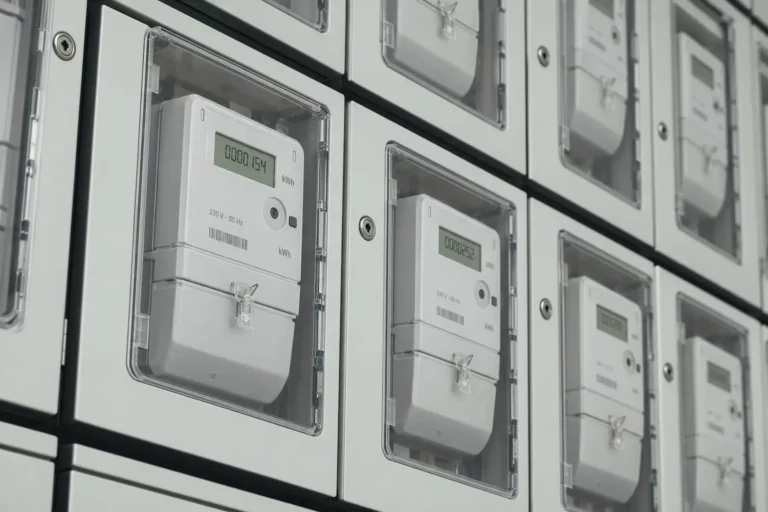
This is the measurement layer. Sensors, meters and connected devices capture consumption and operating variables in real time and in a standardized way. It provides the reliable data that everything else rests on: without consistent measurement, any action is taken blindly.
BMS and Control Systems for Acting on Equipment
A Building Management System (BMS) is the execution layer: it controls equipment such as HVAC, ventilation or lighting according to set commands. It’s essential for carrying out instructions, but it’s worth keeping its limits in mind, since a conventional BMS is oriented toward control and comfort, not necessarily toward energy performance or the active management of flexibility.
EMOS to Manage and Optimize Demand
This is where an Energy Management and Optimization System (EMOS) platform makes the difference. An EMOS integrates monitoring, management and optimization into a single layer: it analyzes data, incorporates energy demand forecasting, decides when and how to shift loads, and passes those instructions on to the control system. It’s the piece that turns building energy automation into a coordinated flexibility strategy, rather than a collection of isolated automations. The three strategies described above are orchestrated on top of this energy management platform.
What Benefits Does Energy Flexibility Bring to a Business?
Properly applied, energy flexibility has a direct impact on costs, revenue and regulatory positioning. Its main benefits are:
- Savings on the electricity bill, by shifting consumption to cheaper hours and reducing contracted power through peak shaving.
- New revenue or compensation, through participation in flexibility markets and demand response programs.
- Greater use of renewable self-consumption, by aligning consumption with on-site generation hours.
- Resilience against volatility, both in energy prices and grid conditions.
- Reduced emissions, by concentrating consumption at the times when the grid is cleanest.
- Regulatory readiness, ahead of a European framework that is pushing toward smarter, more digitalized buildings.
The specific scope of each benefit depends on the starting point, the type of facility and the measures applied, but they all share the same foundation: the ability to make decisions based on reliable data.
How Is a Building’s Energy Flexibility Measured?
Flexibility can be assessed from two complementary angles.
From an operational standpoint, it is measured by its magnitude (how much power the building can shift or reduce), its duration (how long it can sustain that change) and its availability (how much advance notice it needs and how reliably it can be activated). These parameters determine the real value the building can offer to the grid or the market.
From a standardized standpoint, the European reference is the Smart Readiness Indicator (SRI), a European Commission indicator that assesses a building’s capacity to use smart technologies. The SRI evaluates three functionalities: optimizing efficiency and performance in use, adapting to occupants’ needs, and adapting its operation to grid signals — in other words, energy flexibility. Its assessment is organized around nine technical domains and seven impact criteria, one of which is precisely energy flexibility and storage, and it produces a class and a score that express how close the building is to its maximum smart readiness.
The SRI is currently a voluntary scheme, but the recast EU Energy Performance of Buildings Directive (EPBD) points toward making it mandatory: the European Commission must adopt, by 30 June 2027, a delegated act requiring the SRI to be applied to non-residential buildings with HVAC systems over 290 kW.
In parallel, Member States must set minimum requirements for building automation and control systems in buildings over 290 kW, extending to buildings over 70 kW in 2029. Measuring flexibility is therefore shifting from an optional exercise to a progressive requirement.
How to Implement an Energy Flexibility Strategy in a Building?
Implementing flexibility isn’t about installing a specific piece of equipment — it’s about following an orderly process that goes from data to action.
- Measure and understand demand. Deploy continuous monitoring to map the building’s real load curve and identify when and where consumption is concentrated.
- Identify flexible loads. Determine which energy assets allow shifting or modulation (HVAC, hot water, storage, EV charging, thermal inertia) and by how much.
- Define objectives and constraints. Set what you’re aiming for (savings, peak shaving, market participation) and which comfort and process limits cannot be crossed.
- Deploy control and automation. Connect assets to control systems and to a management layer that allows them to be acted on in a coordinated way.
- Forecast and optimize. Incorporate demand forecasting and optimization rules to automatically decide when to shift or reduce loads and, where applicable, participate in demand response.
- Measure results and improve. Verify the effect of each action on cost and consumption, and continuously adjust the strategy.
The quality of the outcome depends above all on the first two phases: without reliable data and a clear map of flexible loads, the rest of the process runs on assumptions.
From an Efficient Building to an Energy-Flexible Building
For years, managing a building’s energy well meant consuming less. Flexibility adds a second dimension: consuming intelligently, adapting demand to the electricity system and turning the building into a resource capable of responding to its environment. In a context of volatile prices, more renewables and regulation moving toward smarter buildings, this capability is shifting from an advantage to a requirement.
The real leap, however, doesn’t come from installing more equipment, but from the ability to measure, decide and act on data in a coordinated way. That is precisely EMOS territory. If you want to assess the flexibility potential of your facilities and how to put it into operation, get in touch with our team.
Recommended for you


You deserve a facility management system that works with you
Request a free demo and discover how other maintenance, sustainability, and energy efficiency teams are achieving real results. No unnecessary complexity. Just a clear roadmap designed to scale with you.



