
What is urban automation From connected cities to smart cities

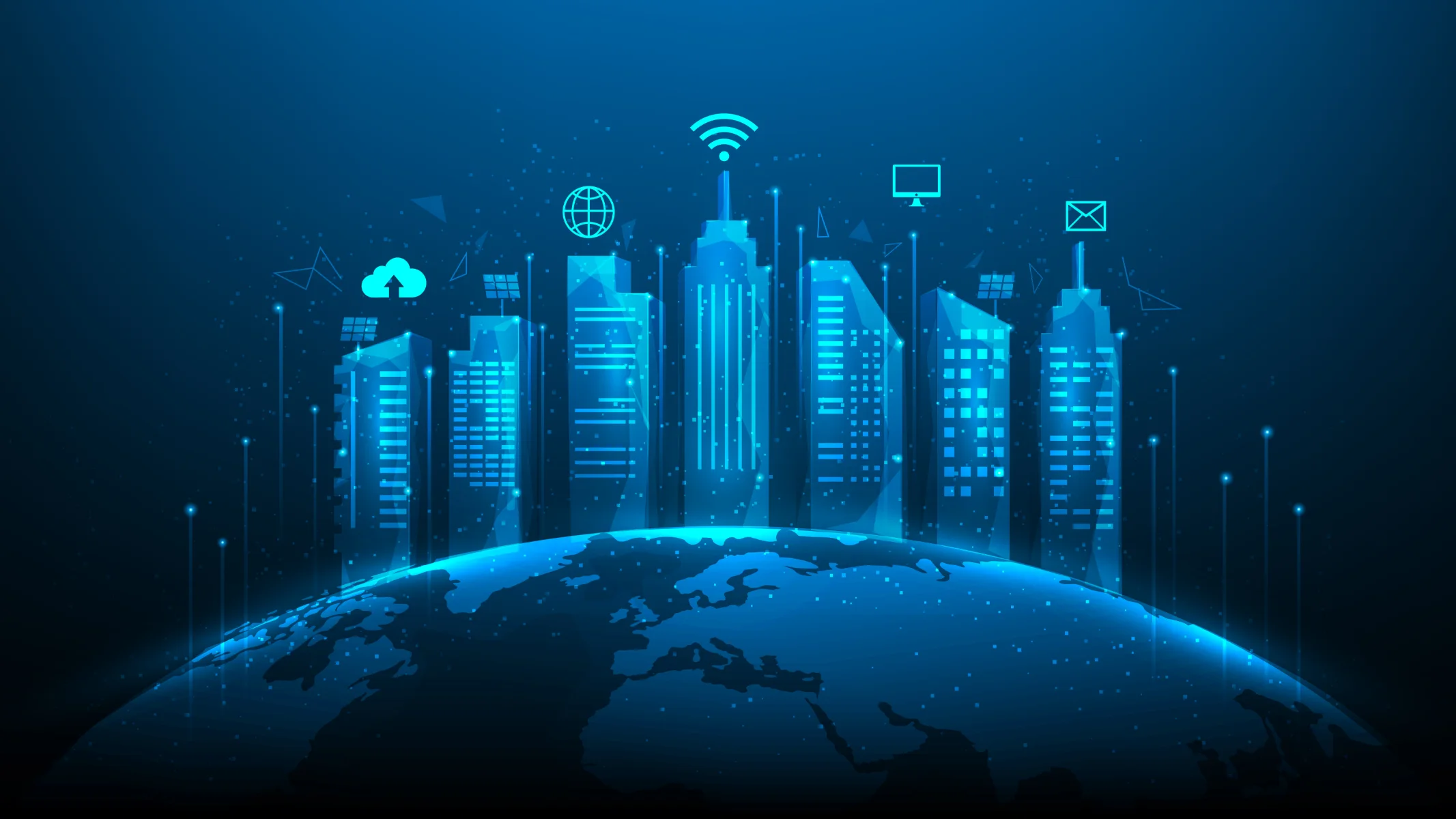
You’ve probably heard about connected cities and smart cities. Well, urban automation is what is right in the middle, that step that converts one into another. Basically, it is automation applied to an entire city, integrating public services and infrastructure with a triple objective: optimize resources, improve the quality of life and create more sustainable and efficient cities.
Currently, with cities facing increasingly complicated challenges (from how to manage energy or waste to mobility problems), urban automation offers practical solutions using technology and automation.
Continue reading and discover with us what urban automation is and how this technology is going to completely transform our cities.
Definition of urban automation
The name itself, urban automation, already tells us a lot. It arises from mixing urbs (which in Latin means “city”) and tica (from the Greek, something like “that works on its own”). The term reflects quite well what the issue is about: intelligent automation applied to an entire city.
Although, if we get a little more formal, we could say that the definition of urban automation encompasses all those technologies that automate cities to make better use of urban resources, while improving security, comfort, communications and making public services more sustainable. Or put another way: integrate technology into the design of a city so that it functions more sustainably and efficiently.
In any case, what really distinguishes urban automation is how it captures information through sensors and cameras, processes it and draws conclusions to make automatic decisions that save resources and improve services. And be careful, its scope is enormous, since practically any element of a current city can be automated and be part of an urban system.
History and evolution of urban automation
The truth is that urban automation as a concept is quite new. The term began to circulate when «home automation» (that of houses) and «building automation» (that of buildings) fell short of describing everything that was already being developed technologically for cities.
Now, attempts to improve cities with technology date back several decades. Already in the 1960s, in cities like Los Angeles, they were collecting data and using very basic computer programs to identify which areas needed the most resources. Of course, the expression “smart city” did not begin to circulate in academic circles until well into the 90s.
From the connected city to the smart city
The progress towards smart cities has been a gradual path, but without pause. The idea of smart cities appeared in the late 90s, but was not truly consolidated until the early 2000s. During those years, city councils and some companies began to experiment with technology seeking to improve both efficiency and the lives of citizens.
It was from 2010 when the concept expanded to what we know today: a complete transformation of cities using digital technologies and artificial intelligence. This process shows us how cities have ceased to be passive structures without further ado, but have become something alive, which knows how to adapt to the needs of the people who live in them.
How does urban automation work?

The operation of an urban smart city is based on a system that integrates three elements: sensors, controllers and transmitters. This structure makes it possible for the city to act as a kind of intelligent organism, capable of collecting data, analyzing it and carrying out actions automatically.
Data collection with urban IoT sensors
The IoT sensors are the starting point, they function as the senses of the city. These devices detect aspects of the environment such as light, humidity, pressure, temperature, air quality and other factors necessary to manage a city.
In smart cities, we find specialized sensors that detect the entry and exit of vehicles in real time, monitor pollution levels, noise, humidity or how much traffic there is. Santander is a clear example, it has a network of 12,000 sensors that provide continuous data on multiple urban parameters.
These sensors transform physical changes into electrical signals through probes or transducers, allowing them to be immediately analyzed. IoT technology is what makes it possible to link a practically unlimited number of devices, thus facilitating the implementation of urban platforms.
Processing and control in management platforms
Management platforms act as the brain of smart cities. They are technological systems that collect information from different urban areas (traffic, energy, security, public services) and process it to improve the lives of citizens.
How do they work? These platforms use technologies such as the Internet of Things (IoT) and big data analysis (Big Data) to transform thousands of scattered pieces of data into practical and understandable information. In this way, authorities can make better decisions and foresee the future needs of the city.
The most sophisticated platforms go one step further. They not only process information, but they coordinate and organize all urban data in a comprehensive manner. They are specially designed to adapt to the needs of modern cities: manage information that comes from multiple sources, process enormous volumes of data and ensure that critical systems work safely and efficiently.
Automation and real-time response
And here is what really makes the difference between urban automation and other systems: automation and real-time response. Urban systems can execute actions instantly, based on the analysis of the data they receive.
For example, humidity detectors controlled in real time can make the automatic decision to activate irrigation in parks and public spaces only when necessary, saving enormous amounts of water. Or the systems that regulate traffic lights, capable of modifying their times according to the traffic that exists at that precise moment.
This speed of reaction makes cities work better, pollute less and know how to adapt on the fly to what their inhabitants need.
Applications of urban automation
Urban automation covers multiple areas of urban life, transforming practically all aspects that define daily life in cities. The areas where it is currently being implemented the most include urban mobility, energy savings, public infrastructure management, urban equipment and citizen security.
1. Smart mobility and transportation
Traffic management and intelligent transportation is one of the applications with the greatest impact. Smart sensors and cameras analyze vehicle flows in real time, optimizing traffic lights and routes to reduce traffic jams and improve air quality. Intelligent traffic control systems can use all that information to automatically adjust signals and optimize the flow of vehicles and pedestrians.
In the area of smart parking, IoT sensors such as the U-Spot are installed buried in the asphalt to detect the entry and exit of vehicles with more than 98% reliability. This technology allows drivers to be guided to free spaces, reducing urban traffic and emissions.
2. Public lighting and energy efficiency
The implementation of smart public lighting adapts the intensity of the light to the real needs of the streets, reducing energy consumption and increasing security. These systems can be adjusted based on movement or if there is a special event, ensuring that there is light where and when it is needed.
These systems are typical examples of urban automation that optimize consumption and reduce public spending.
3. Water and waste management
Urban automation is also changing waste management. There are sensors that indicate the fill level of the containers, which allows collection routes to be planned more efficiently. This not only reduces costs and avoids unnecessary trips, but also contributes to having a cleaner city.
In addition, as we already mentioned, water management is one of the areas where urban automation demonstrates its effectiveness. Intelligent systems include leak detectors and consumption monitors that identify abnormal expenses in real time, allowing an immediate response to possible breakdowns.
Moisture detectors are also used to automatically decide when to water parks and gardens.
4. Security and citizen services
Citizen video surveillance systems are another fundamental application. By being integrated, they can coordinate emergency response, improve public safety and facilitate the management of mass events.
Currently, these systems are evolving towards even more sophisticated solutions. The European project SHIELD4CROWD (2025) has developed advanced systems to detect threats such as drone attacks, knife attacks and urban disturbances in public spaces, using artificial intelligence and IoT sensors to coordinate automatic responses.
5. Environment and air quality
Environmental surveillance is crucial. Sensors can monitor air quality, pollution levels and other environmental parameters in real time. This information allows to act preventively and correctively to protect public health.
6. Buildings and public spaces
Urban automation also extends to intelligent management of buildings and public spaces. Systems that control energy in buildings (BMS) use IoT sensors to monitor consumption and detect leaks, making better use of resources. In public buildings, these systems can cut energy costs by up to 40% with advanced savings solutions, as confirmed by the National Energy Technology Center (CETENMA).
Recommended for you


You deserve a facility management system that works with you
Request a free demo and discover how other maintenance, sustainability, and energy efficiency teams are achieving real results. No unnecessary complexity. Just a clear roadmap designed to scale with you.



