
Industrial vs commercial IoT Differences and applications

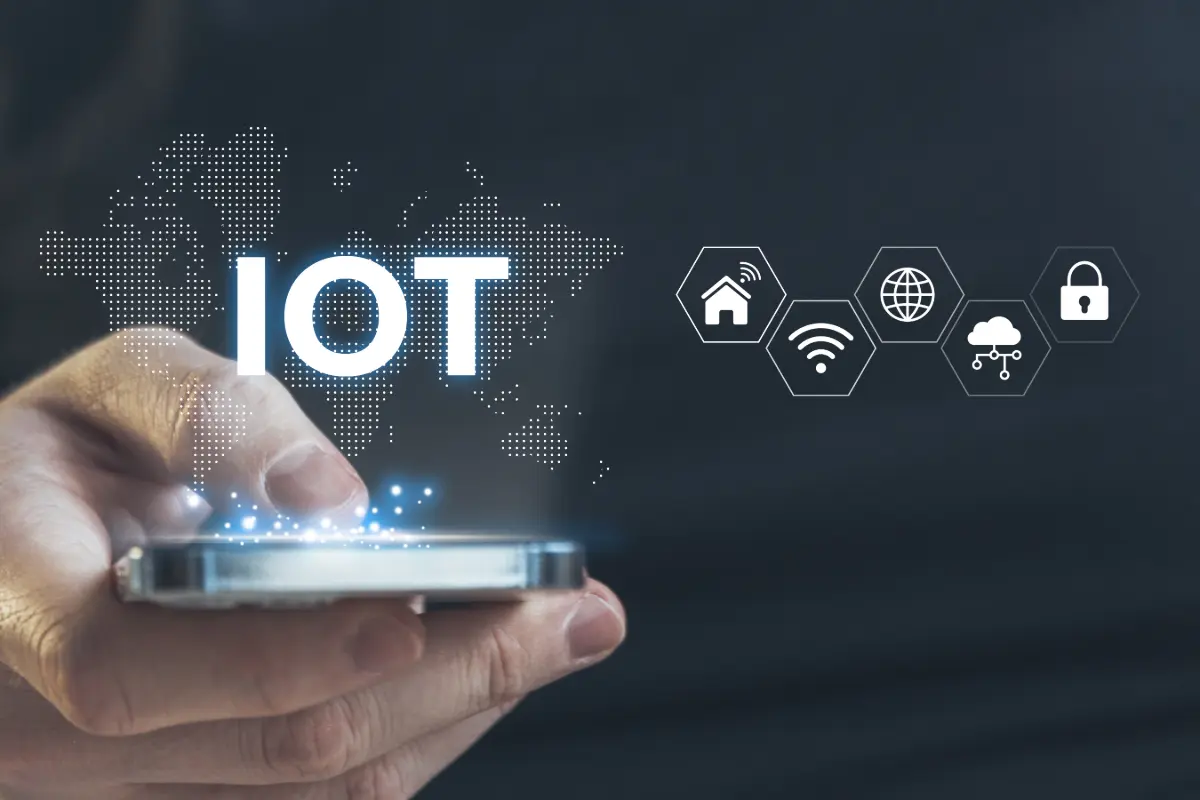
The Internet of Things (IoT) is not the future, it is the present that is transforming the way companies operate. Whether it’s a large production plant or a small neighborhood business, everything is becoming smarter and more connected: the devices, the systems, the processes… But this is where we must make a crucial distinction: implementing IoT in a factory has nothing to do with doing it in a store.
The Industrial IoT (IIoT), which lives in the heart of factories, requires robustness, maximum security and fail-safe reliability, because one error can stop an entire production chain. On the other hand, in the commercial IoT, which we find in stores and offices, the priorities are different: improving the customer experience, being flexible to quickly adapt to new trends and, of course, keeping implementation costs under control.
The data doesn’t lie. Companies that are committed to Industry 4.0 with IIoT solutions report improvements of between 20-25% in their operational efficiency, manage to reduce the downtime of their machines between 30-50% and manage to extend the service life of their equipment by up to 40%. In the commercial sphere, the numbers are equally surprising: smart buildings and stores can achieve energy savings of 25-30% and register 35% improvements in the customer experience.
So what exactly is the Internet of Things (IoT)?
In essence, the IoT is a vast ecosystem of physical objects—from a temperature sensor to a robotic arm—that have built-in sensors, software, and an internet connection. Its mission is to collect, share and analyze data in real time. Thanks to this technology, devices that were previously mere isolated objects can now “talk” to each other, make autonomous decisions and optimize processes without the need for constant human supervision.
The architecture of a modern IoT system is based on four pillars:
- Data collection devices: Sensors that measure, cameras that see, actuators that execute. They are the senses and the hands of the system.
- Connectivity systems: The network that unites everything, from the familiar Wi-Fi or the powerful 5G to low-power protocols like LoRaWAN.
- Processing platforms: The brain, which can be on the device itself (Edge Computing) or in the cloud (Cloud Computing), processing the information.
- Analysis applications: The tools that allow us to visualize data and make sense of it, such as dashboards, Artificial Intelligence and Machine Learning.
This combination is what allows us to create everything from healthier and more efficient offices to smart cities. Each component plays a specific role, and together they generate something that none of them could generate separately.
The big differences between industrial and commercial IoT

The differences go far beyond technical specifications. They reflect two different philosophies about what is priority when managing and optimizing a business.
Operating environment and resistance
The Industrial IoT (IIoT) must survive in hostile environments: extreme temperatures (from -40°C to +85°C), constant vibrations, dust, humidity or corrosive atmospheres. For this reason, it needs industrial certifications such as IP67/IP68, which guarantee its water resistance and durability. Commercial IoT, for its part, lives in controlled environments such as offices or stores. Here, aesthetic design and ease of installation usually outweigh extreme resistance.
Availability and reliability requirements
An industrial system cannot afford to fail. Availability of 99.9% or higher is required, with redundant systems that ensure uninterrupted operation for years. An unforeseen shutdown can cost millions. Commercial solutions, although reliable, allow for greater flexibility and can allow for brief interruptions for upgrades or maintenance, as the focus is on user experience and agility.
Communication protocols
The IIoT uses protocols designed for robustness and precision, such as OPC UA, Modbus, Profinet or MQTT Sparkplug. The reason is simple: you need deterministic communication, where every millisecond counts, and minimal latency. Commercial IoT relies on more widespread and economical standards such as Wi-Fi, Bluetooth or Zigbee, optimized for low consumption and ease of use.
Security architecture
Here the differences are substantial. Industrial security protects critical infrastructure, so it implements multi-factor authentication, end-to-end encryption and “Zero Trust” architectures. There is no room for improvisation. Business security focuses more on protecting customers’ personal data and business information. They are different levels of risk that require different responses.
Data processing models
The IIoT often needs to process data on the fly, with latencies less than 1 millisecond, to control critical processes in real time. Commercial IoT can tolerate higher latencies, since its priority is the analysis of medium and long-term trends to personalize the customer experience.
Scalability and cost
Industrial systems usually scale “vertically”: large investments are made in very powerful and centralized infrastructure. Commercial solutions, on the other hand, scale “horizontally,” adding more devices with a cost-per-unit model, making them more affordable to start with.
Practical applications: from the workshop to the store
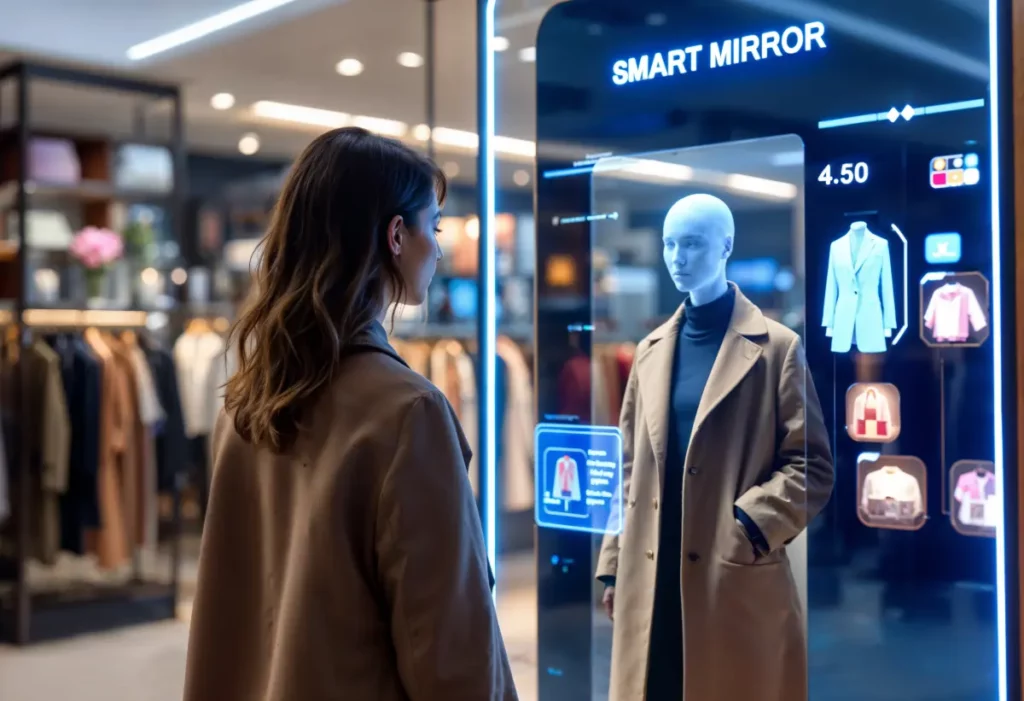
The best way to understand the true scope of the Internet of Things (IoT) is to observe how it is applied in reality. Beyond theory, what defines its value are the results: cost reduction, process optimization and the creation of competitive advantages.
Examples of IoT in industry (IIoT)
Industrial applications are turning traditional factories into highly automated and efficient smart factories.
- Predictive equipment monitoring: Industrial sensorization systems that monitor vibrations, temperature or consumption of a machine in real time to predict failures with an accuracy of over 90%. Siemens, for example, uses IIoT sensors to detect microscopic defects in printed circuit boards before they ruin a production batch. It’s not magic, it’s the power of data patterns.
- Automated predictive maintenance: AI algorithms that analyze how machines work to schedule maintenance just at the optimal time. The result: cost reduction of up to 25% and a reduction in unplanned downtime of up to 50%.
- Intelligent facility control: Integration with SCADA systems to optimize energy consumption automatically and manage distributed processes. Hybrid platforms allow to create personalized alarms and control rules for each corner of the factory.
- Operational digital twins (Digital Twins): Creation of virtual models that are an exact replica of physical equipment or processes. They serve to simulate scenarios, optimize performance and train personnel without risking real machinery. The benefit: the service life of assets can be extended by up to 40%.
Supply chain automation: Complete product traceability through RFID and IoT sensors that optimize logistics and reduce waste. Each shipment is one more piece of information; Each piece of information, a new opportunity for improvement.
Examples of commercial IoT in buildings and retail
Business applications focus on three pillars: improving customer experience, optimizing operational efficiency and facilitating remote management.
- Smart energy management in buildings: Systems that automatically adjust air conditioning, lighting and ventilation according to the actual occupancy of the rooms, achieving savings of between 25% and 30%. In hotels, energy optimization using BACS can reduce operating costs by up to 35%.
- Personalized retail experiences: Sensors (beacons) that send offers and contextual recommendations to a customer’s mobile phone when they are in a specific aisle, increasing conversions by up to 25%. IoT systems also analyze customer movement patterns to optimize the distribution of products in the store.
- Environmental quality monitoring: Sensors that measure air quality in offices (CO₂ levels, volatile organic compounds) and automatically adjust ventilation. The result: it has been shown that a healthy work environment can improve employee productivity by up to 15%.
- Intelligent inventory management: Sensors that monitor stock in real time, reducing losses due to expiration by up to 30% and automating replacement orders. Less waste, fewer surprises.
- Adaptive security systems: Intelligent cameras with behavioral analysis that detect anomalies, manage access automatically and send alerts only when really necessary.
IT/OT convergence: when industry and commerce shake hands
The true revolution is in the convergence between Information Technologies (IT) and operational technology (OT). Comprehensive management platforms are currently emerging that unify industrial and commercial applications under the same architecture. What is achieved with this?
- Hybrid ecosystems: Industrial sensors that send data to commercial control panels, and vice versa. An example is the success story of Galuresa, which integrates its industrial production with the commercial management of its service stations. Data flows in both directions, enriching the entire system.
- Cross-sector optimization: Factory production data can inform marketing and sales strategies in real time. It is not that industry and commerce work together; is that they work as a single, coordinated body.
- Converged business models: Technological platforms that serve both the manufacturing plant and the store network under a single infrastructure, which can reduce implementation and maintenance costs by up to 40%.
Challenges and barriers in multi-site IoT projects
Implementing an IoT solution that spans different environments is not a simple path. There are technical, economic and organizational challenges.
- Integration with legacy systems: Many industrial systems (SCADA) or building management systems (BMS) are old and do not “speak” modern languages. Integrating them requires specialized gateways and protocol translators, which can increase project costs by up to 30%.
- Connectivity challenges: Mobile network coverage in industrial warehouses or remote areas may be poor. Electromagnetic interference from heavy machinery can affect communication. Robust solutions need redundancy (multiple operators, backup technologies).
- Data security and protection: By uniting the IT and OT worlds, new doors are opened to cyberattacks that can compromise both production and customer data. Implementing “zero trust” architectures is essential, but can increase security costs by up to 25%.
- Scalability and cost management: The number of connected devices can grow exponentially, creating management problems that saturate infrastructure if not planned well.
- ROI and investment justification: IoT projects can require a significant initial investment (from €100,000 to over €1M), and the return on investment (ROI) can take between 18 and 36 months to materialize. It is vital to measure the impact with clear KPIs.
Skills and training: There is a shortage of professionals who master both the world of operational technology (OT) and information technologies (IT). This creates bottlenecks and forces companies to invest up to 15% of the project budget in specialized training.
The solution: a multi-site platform that unifies industrial and commercial IoT

Modern platforms solve these challenges with a hybrid architecture that combines the best of several worlds.
Hybrid architecture: Cloud, Edge and Gateways
This three-layer approach optimizes speed, costs and availability:
- Edge Computing: Local devices are provided with computing capacity to process critical data with latencies less than 5 ms, something essential for real-time industrial control. They filter and process up to 80% of the data at the source, reducing traffic to the cloud.
- Cloud Sync: Offers massive, scalable storage for historical data analysis, long-term optimization, and AI model training.
- Translation gateways: Devices that act as interpreters, converting industrial protocols (Modbus, OPC UA) to cloud-compatible formats (MQTT, HTTP), allowing communication without having to change old systems.
Native integration with APIs, BMS and SCADA
Native integration with corporate systems eliminates information silos and enables centralized operations management.
- Native SCADA connectors: Specialized APIs that integrate directly with industrial supervision systems, maintaining determinism and low latency. This integration allows events and notifications to flow bidirectionally between systems.
- BMS Integration: Native connection with building management systems to unify climate control, lighting and security control under a common platform. The integration facilitates comprehensive energy optimization that considers both industrial and commercial demand.
- Third-party APIs: RESTful connectors that allow integration with ERP, CRM and business intelligence systems, creating end-to-end data flows. This capability facilitates process automation and unified business operations management.
Global visibility and smart alerts
The objective is to have a 360º view of all operations from a single place.
- Contextual control panels: Interfaces that adapt to the user. A CEO sees an executive summary, while a maintenance technician sees vibration data from a machine. Each user sees what they need to see, and nothing more.
- Predictive alerts: Machine Learning systems that analyze data patterns from all sectors to generate early alerts, reducing incident response time by up to 70%.
Data management and security
A robust platform must guarantee the security and governance of data from its origin to its analysis.
- IoT data governance: Automatic policies that classify and protect data according to its origin (industrial or commercial) and its criticality, ensuring compliance with regulations such as the GDPR.
- Multi-layer security: Implementation of end-to-end encryption, multi-factor authentication and continuous threat monitoring to protect both operational and business data.
The future of operational management is unified and intelligent
Modern management is leaving behind the idea of operating the industrial and commercial areas separately. The future belongs to platforms that connect both worlds, allowing data from a factory to optimize the logistics of a store, and vice versa.
This total connection transforms organizations into more agile companies, capable of reacting instantly to market changes and finding new opportunities for efficiency in the union of their operations. Platforms like OTEA are facilitating exactly this: a single system where the factory, commerce and logistics operations speak the same language, understand each other in real time and optimize together.This is no longer science fiction; It’s happening now. The key question is no longer whether this union will happen, but which companies will be the first to adopt and capitalize on it.
Recommended for you


You deserve a facility management system that works with you
Request a free demo and discover how other maintenance, sustainability, and energy efficiency teams are achieving real results. No unnecessary complexity. Just a clear roadmap designed to scale with you.



