
Home automation vs building automation. Differences and similarities

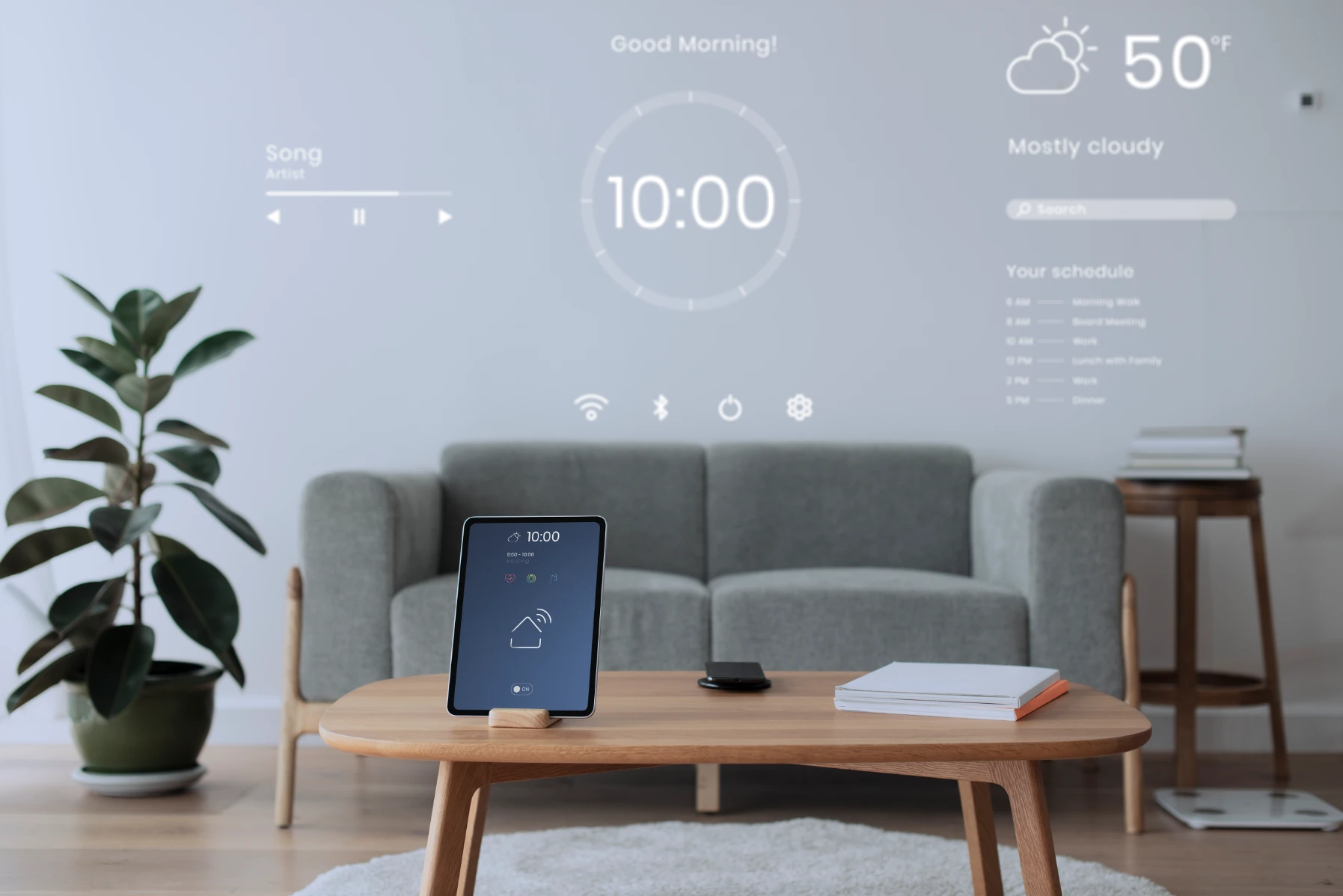
Talking about houses and buildings that manage themselves no longer sounds like science fiction. At OTEA, we are very aware that smart technology not only helps us use less energy, but, above all, it radically changes how we relate to the spaces where we live and work.
And although many in the sector use the terms home automation and building automation as if they were the same, the truth is that each one has its own characteristics that make them unique. To begin with, the most important difference is where they are used: while home automation is designed for the home, building automation is applied in buildings such as offices, hotels and shopping centers.
Before discovering the differences and similarities between home automation and building automation, let’s understand what they are.
What is home automation?
Home automation basically consists of a set of technologies that help us control and automate our home intelligently. Its objective is to help us use energy more efficiently and, in the process, have more security and comfort. In other words, it makes communication between us and the home systems much easier.
The Spanish word domótica gives us a clear clue. It comes from the union of ‘domus’ (house in Latin) and ‘tica’ (which works on its own, from the Greek). And that is just what you are looking for: that your home responds to your needs almost without you having to ask it.
But how does it work in practice? Home automation creates a network of devices that communicate with each other, either through a central hub or directly. Where you will really notice the difference is on a daily basis:
Smart climate control learns from your schedule and adjusts to the weather outside. The best thing is that if you open a window, the system detects it and turns off the heating to avoid wasting energy.
Lighting control goes far beyond turning it on and off. You can regulate the intensity, create environments such as a “cinema mode” or program the lights to turn on by themselves when it gets dark.
In security, the advantage is enormous. Cameras with real-time vision, sensors on doors and windows, and connected alarms notify you instantly on your mobile if something happens. Smoke or water leak detectors can save you more than one scare.
And as for energy management, smart plugs show you exactly what each appliance uses, helping you save by scheduling its use at cheaper times.
Even the automatic blinds have their reason for being: they go up and down depending on the time or the sun, helping to regulate the temperature naturally and saving on air conditioning.
For all this to work, a home automation installation needs several elements that collaborate with each other. The brain of the system can be a specific hub, but today it is also done by a smart speaker like Google Home or even an app on your mobile phone. Its mission is to receive your orders and distribute them.
On the other hand, there are the sensors‘ that act like the senses: they capture everything that happens, from temperature and humidity to movement or whether a window is open. Without them, the system would have no information to work with. Then there are the actuators, which are those that execute physical actions: smart plugs, light bulbs, motors for blinds or locks. They are the ones who really do the work.
So that everyone understands each other, they use communication protocols. Wi-Fi and Bluetooth are the most common, but there are others such as Zigbee or Z-Wave that create a more stable network with less consumption. And so that you can interact, there are the interfaces: mobile apps, voice assistants or touch panels.
The best thing of all is that you don’t need a large investment to get started. Current home automation is modular: you can start with a few light bulbs and a speaker, and expand little by little according to your needs and possibilities.
What is building automation?
Building automation is the set of technologies that are applied to intelligently control and automate buildings that are not homes. Think of hotels, shopping centers, schools, hospitals and in general, any building in the industrial or service sector. Its main objective is to optimize energy use, but also to improve safety, comfort and facilitate communication between users and the system that manages the building.
If you want to know more about the topic, we have an article dedicated to explaining what building automation is. And if what you want is to delve deeper into the technologies and applications of building automation in industrial facilities, OTEA offers specialized solutions that you can consult in our article on building automation and proactive installations.
Differences between home automation and building automation
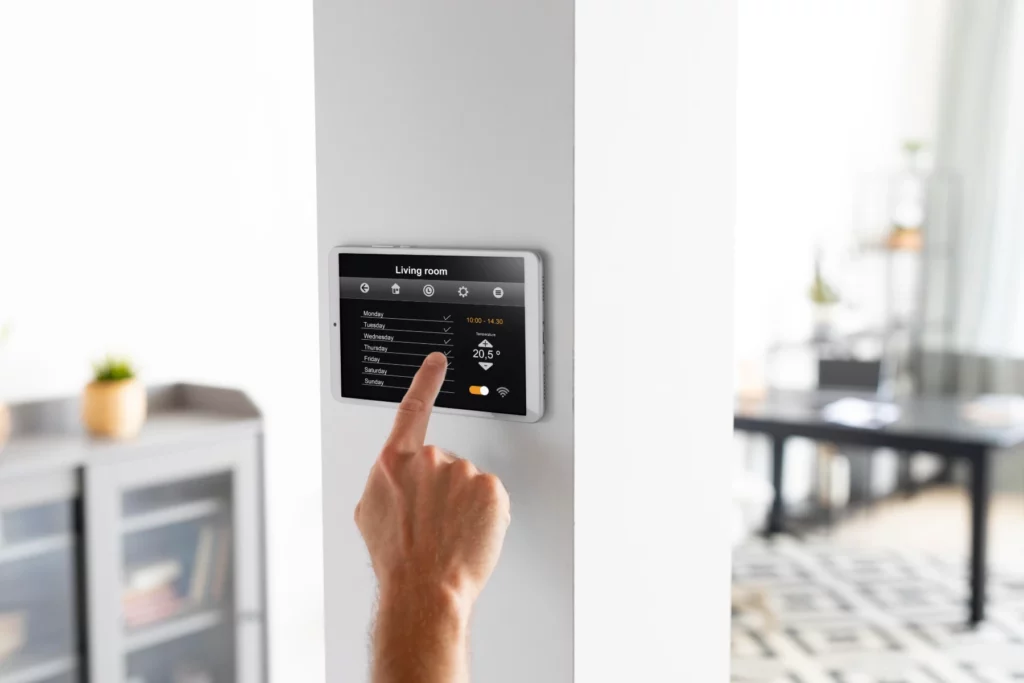
Now that we are clear about both concepts, this is how they differ:
- Scale and scope: This is the most obvious difference. Home automation is exclusively for single-family homes or apartments. The building automation is deployed in buildings for tertiary or industrial use: offices, hotels, hospitals, shopping centers, factories, etc.
- Technical complexity and customization: Home automation systems are designed to be simpler and more accessible. They use “plug & play” or easy-to-install devices, with fairly predefined functions. Building automation, on the other hand, is based on complex systems, tailored for each project. It uses programmable controllers (PLCs), power actuators and specific software that must be configured from scratch for each project by specialized engineers.
- Main objectives: Although both seek efficiency and comfort, the balance tips differently. The main objective of home automation is the comfort and quality of life of the resident. Automate tasks, provide comfort and provide security. On the other hand, the main objective of building automation is operational efficiency and economic savings by automating with logic and controlling machines remotely. A clear example is the reduction of product losses in supermarkets, so return on investment (ROI) is a fundamental metric.
- Control methods and user interface: Home automation control is simple and user-friendly. It is mainly done from intuitive mobile apps, remote controls or voice assistants. Control in building automation requires professional interfaces and supervision centers (such as SCADAs). They are screens with building plans, technical diagrams and control panels that allow all subsystems to be managed in a unified way. It is intended for a facility manager or facilities manager, not the end user.
- Data processing capacity and volume: a home generates a manageable amount of data. Basic home automation does not require a lot of computing power. A smart building, with thousands of sensors, generates huge amounts of data (Big Data) that need to be processed, stored and analyzed in real time. Building automation requires servers, powerful databases and much more sophisticated analysis algorithms.
- Investment and business model: Home automation is usually a direct investment by the owner of the home, who chooses the devices he wants. Building automation is a strategic investment for a company or owner of a building automation asset. It is valued not as an expense, but as a tool to reduce operating costs and increase the value of the building. The budget and size of the project are not comparable.
Similarities between home automation and building automation
Despite their obvious differences, both disciplines share a common technological DNA. They are two sides of the same coin: the automation of spaces.
- Common technological base: Deep down, both are based on the same pillars: sensors that capture data, actuators that execute actions, communication protocols (such as KNX, Modbus, Zigbee, etc.) that allow devices to talk to each other, and management software that orchestrates the entire system. The IoT philosophy is fundamental in both.
- Pursuit of energy efficiency: both have as one of their fundamental objectives reducing energy consumption. Whether optimizing the operation of a hospital’s central air conditioning or turning off the lights in an empty room in a house, the strategy is similar: automate with logic to spend only what is necessary.
- Improved safety and comfort: Both technologies care about the people who occupy the space. They incorporate advanced security functions (surveillance, alarms, access control) and work to create more comfortable environments adapted to the needs of users (perfect air conditioning, adequate lighting).
- Communication architecture: Although the scale varies, the principles of network communication are similar. Many of the wireless (Zigbee, Z-Wave) or wired (KNX) protocols are used in both areas, theoretically allowing some interoperability between devices from different manufacturers.
- Learning and adaptation capacity: The most modern systems in both fields incorporate artificial intelligence and machine learning algorithms. This allows them to learn from users’ habits, predict behaviors and adjust their operation autonomously to be even more efficient. A house that learns your routine and a building that anticipates peak occupancy hours share this philosophy.
- Contribution to sustainability: This is, perhaps, the most important similarity at a global level. Both home automation and building automation are tools designed for environmental sustainability. By allowing a much more rational use of energy and resources, they directly help reduce the carbon footprint of buildings and homes, contributing to the fight against climate change.
Two visions of the same intelligent future
So, home automation or building automation? The point is not to choose between one or the other, but to understand that they are two sides of the same coin: intelligent automation applied at different scales.
On the one hand, home automation brings this technology to ordinary people, making comfort and energy savings accessible in the home. On the other hand, building automation acts as that invisible skeleton that allows the automation of buildings – offices, hospitals, shopping centers -, making them more efficient, safer and with a lower environmental impact.
At OTEA we specialize in the field of business building automation. We develop tailored solutions to optimize energy consumption and operational management of corporate buildings, hospital centers, industrial facilities and commercial complexes. In the end, the objective is always the same: use technology to create more efficient and better prepared spaces for the present and future.
And what is to come is even more interesting. The future involves integrating technologies that connect not only homes or buildings, but with entire communities. This is what we call urban automation: interconnected smart cities that optimize resources on a large scale. Advances such as intelligent management and remote operation allow to improve efficiency, anticipate leaks and breakdowns and reduce response times, something that we already apply in our solutions.
Integration with IoT makes it possible to collect data in real time, analyze it and act predictively on any system, from a household appliance to an entire industrial plant. These systems not only respond, but anticipate needs.
In the end, automation is no longer an optional extra. Today it is a central element to build a future where efficiency and sustainability are non-negotiable. And along this path, both home automation and building automation – each in its own way – are driving an unstoppable change towards more efficient, sustainable and connected management.
Recommended for you



You deserve a facility management system that works with you
Request a free demo and discover how other maintenance, sustainability, and energy efficiency teams are achieving real results. No unnecessary complexity. Just a clear roadmap designed to scale with you.



