
How artificial intelligence is used in building management systems


A fad or a revolution? That is the question that many building managers ask when they hear about artificial intelligence applied to BMS systems. The answer is clear: it is a revolution that is already here. Smart BMSs are not the future: they are the most efficient way to operate your buildings today, right now, in 2026.
Imagine having a building management system that not only controls HVAC, lighting and security, but also learns from every decision, anticipates problems and optimizes every resource without you telling it what to do. That is exactly what artificial intelligence brings to a BMS (AI building management system). But how exactly does it work? What do you need to implement it? What are the real limits?
Next, we answer these questions and explain in detail how artificial intelligence is applied in BMS systems.
What does the arrival of artificial intelligence mean in BMS systems
The arrival of AI to BMS has brought about a drastic change in management mentality. We move from reactive systems (that respond to what is happening now) to proactive systems (that anticipate what is going to happen).
A traditional BMS works with fixed rules: if the temperature exceeds 24°C, it turns on the air conditioning; If occupancy is zero, turn off the lights. It works, but it is inflexible. It doesn’t learn from your usage patterns, it doesn’t adapt to changes in weather or occupancy, and it can’t predict when equipment will fail.
A BMS with artificial intelligence, on the other hand, continually analyzes data from multiple sensors: indoor and outdoor temperature, humidity, real-time occupancy, electricity consumption, fault history, seasonal patterns, and much more. Machine learning algorithms identify complex relationships between that data that the human eye would never see.
This shift in data-driven building management completely transforms how you operate your facilities. For example, the system might discover that there is a correlation between certain outdoor temperature spikes, occupancy in the office area, and recurring failures of a particular fan. With this information, the operating parameters are automatically adjusted before the failure occurs.
If you want to better understand the differences between different control systems, you can consult our article on differences between EMS, BMS and SCADA.
Advantages and uses of artificial intelligence in a BMS system
When you bring AI to the BMS, the benefits are quickly noticeable in the day-to-day life of the building. Let’s see the clearest advantages and in which situations they really help you.
Energy optimization and cost reduction
Perhaps the most visible and measurable advantage. Buildings with smart BMS can reduce their energy consumption between 15% and 30%, in nonresidential buildings with energy efficiency requirements, such as offices, shopping centers or hospitals. How? AI constantly adjusts HVAC systems based on actual occupancy, external weather conditions, and users’ comfort preferences.
But it’s not just blind automation. The system learns which configurations generate the lowest consumption while maintaining comfort. If it finds that reducing the temperature by 1°C during low occupancy hours has virtually no effect on comfort but saves energy, it will do so automatically. This optimization in the operations of the facilities translates directly into your income statement.
Predictive building maintenance
This is where AI really shines. An intelligent BMS can accurately predict when equipment will fail, not based on fixed thresholds but on subtle patterns it detects in sensor data. This predictive building maintenance revolutionizes your operational strategy.
Abnormal vibrations in a motor, changes in the efficiency of a compressor, fluctuations in the pressure of a refrigeration circuit… the system detects them before they become a serious problem. This allows you to:
- Schedule maintenance at the optimal time, not when the equipment has already failed.
- Avoid unforeseen stops that disrupt operations.
- Extend the service life of your assets.
- Reduce emergency repair costs.
Intelligent building automation
On the other hand, AI also takes building automation a step beyond simple time scheduling. It adjusts temperature, lighting and air quality in a personalized way according to the detected usage pattern. If it detects that a certain area of the building is always colder in winter, it automatically adjusts the radiators. If it identifies that occupancy varies by day of the week, it optimizes ventilation accordingly.
This intelligent automation also includes operational tasks: generation of work orders when a potential problem is detected, alerts to specialized technicians, integration with CMMS systems, regulatory compliance reports… all without you having to do anything manually.
Advanced analytics to improve decisions
AI transforms mountains of raw data into actionable insights. Advanced analytics allows you to obtain reports that tell you:
- Which areas of the building consume the most energy and why.
- What are the periods of maximum utilization and how to adapt the operation to those peaks.
- What investments in energy efficiency would give you the greatest return.
- How your smart building performs compared to similar ones.
This operational decision-making based on real data, and not just assumptions, makes the difference between managing a building “blindly” and doing so with clear and measurable criteria. If you want to delve deeper into how Big Data enhances this analytical capacity, consult our article on Big Data in infrastructure management.
What does a BMS need to be able to apply artificial intelligence

You can’t just add AI to any BMS. You need the right foundation. This level of digital maturity in smart buildings and other infrastructure requires meeting certain requirements.
Comprehensive, high-quality sensing
First, you need data. Lots of information from sensors strategically distributed throughout your building. It’s not worth installing a couple of thermometers: you need to measure useful variables (temperature, occupancy, humidity, power consumption, vibration, pressure, air quality) at multiple points so that the algorithms have enough information to learn from.
Consistent data point naming and reliable historical records
Just as important as measuring is knowing what each point is measuring and being able to trust that data. You need consistent naming, consistent labeling and complete historical records, without “gaps” or duplicates, so that the AI understands the context and can scale from one building to another.
Connectivity and systems integration
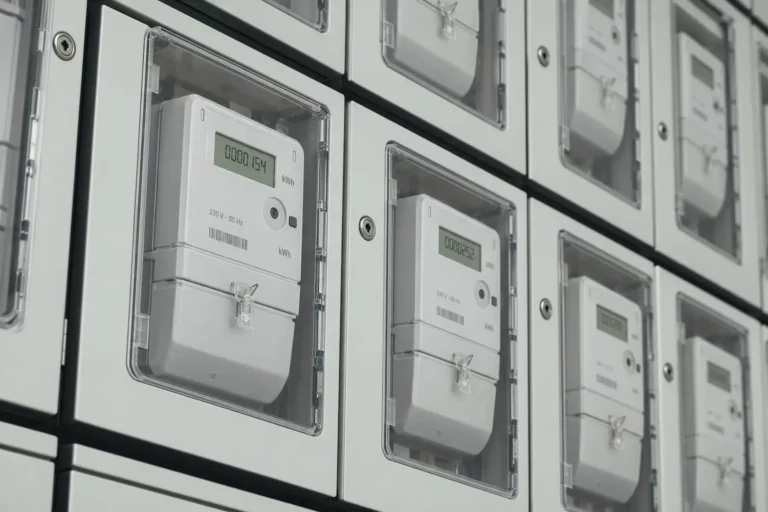
Data must flow seamlessly from sensors, through gateways, to a central platform that processes it. You need systems that talk to each other: BMS, EMS, CMMS, smart meters, IoT devices. Lack of integration is a major barrier to realizing the potential of AI.
AI integration requires open protocols, functional APIs and scalable architecture. If your systems are closed silos that do not share information, implementing AI will be extremely difficult.
Data quality and operational context
Machine learning algorithms are only as good as the data they are trained on. You need clean records, well contextualized and without large gaps. If your data has errors, missing values, or is inconsistent, the AI system will not be able to learn correctly.
You also need context: which areas of the building are offices, which are technical rooms, where there is critical equipment, what occupancy hours you have. Without that context, even the best algorithms generate incorrect recommendations.
Cybersecurity and access control
If AI is going to make decisions about the building, security cannot be an afterthought. You need a secure architecture, with data governance and role-based access control, that protects the BMS and the platform against attacks and misuse. Scalable platform with processing capacity
AI requires processing power. You need a platform capable of handling large volumes of data, running machine learning models in real time (or close to it), and adapting as your building evolves.
A hybrid architecture with edge computing (real-time local analysis) and cloud computing (cloud analysis and continuous learning) is ideal. The platform must also be open: able to connect with equipment from different manufacturers, not just one brand.
Limitations and real expectations in the use of artificial intelligence in BMS
Of course, AI doesn’t solve everything. There are real limitations that should be taken into account so that you can set realistic expectations.
Implementation complexity
Integrating AI into a BMS requires technical knowledge, start-up time and, in many cases, interventions on existing infrastructure. If you work with very old equipment or without communication capacity, the path will be longer and more demanding.
Need for historical records to train models
AI models learn from the past. If you have just implemented a BMS, at first the system will not have enough history to make good predictions. It needs “training time”, typically between a few months and a year, to fully optimize. Patience is key.
Lack of transparency in some decisions
Sometimes AI algorithms generate recommendations that are difficult to understand: “the system suggests reducing the temperature by 2°C” but does not explain exactly why. This “black box” can be problematic in regulated environments or when you need to justify operational decisions to management.
Risk of technological dependency
Managers sometimes fall into the trap of assuming that because the system is “smart,” it doesn’t need supervision. In reality, AI works best when there is a balance between automation and human intervention. You need to keep technical staff on your team.
Major initial investment
Implementing a truly functional BMS with AI requires investment: sensors, connectivity, platform, integration services and staff training. However, the ROI usually justifies it: energy savings, reduced downtime and maintenance savings typically recover the investment in 2-5 years.
Towards truly intelligent building management
In short, AI in BMS is not a passing fad. It is an inevitable evolution in how we manage buildings and facilities. The question is not whether to implement it, but when and how to do it intelligently.
Buildings that already have smart BMS are demonstrating measurable results: lower energy consumption, more reliable operations, equipment that lasts longer, technicians who work more strategically, managers who make decisions based on real data.
At EcoMT, we have implemented this technology in projects such as Alliance Healthcare in Viladecans, demonstrating how the integration of IoT and AI transforms the operation of complex facilities.
If you manage a building, corporate complex, industrial facility or any type of infrastructure, considering integrating AI into your BMS is not a futuristic decision: it is a strategic decision that will allow you to operate more efficiently, more sustainably and more profitably.
The revolution is already here. The time to act is now.
Recommended for you


You deserve a facility management system that works with you
Request a free demo and discover how other maintenance, sustainability, and energy efficiency teams are achieving real results. No unnecessary complexity. Just a clear roadmap designed to scale with you.



