
Five myths about building automation for businesses
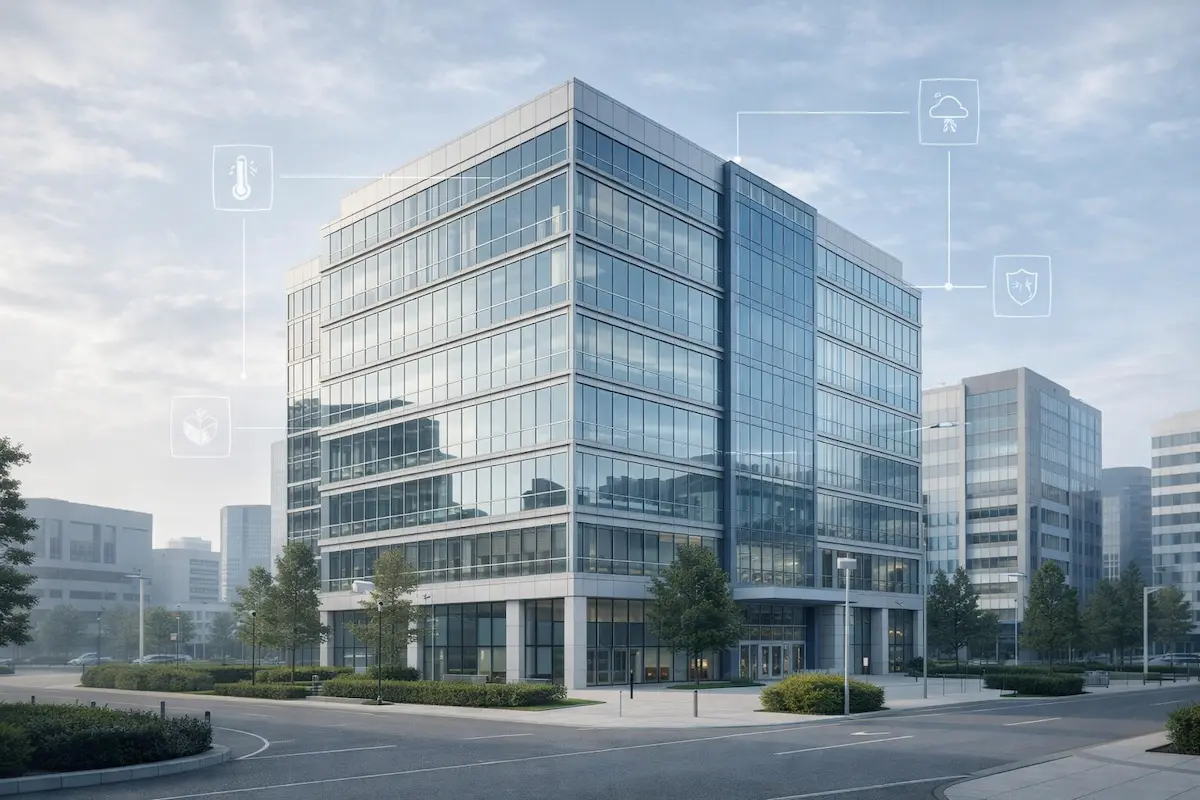
Improving efficiency and reducing bills sounds good to all of us, but when it comes to talking about automating the building, many companies step on the brakes. Why? Almost always due to beliefs that are no longer real: thinking that the costs are unaffordable or that the work will last forever. The problem is that these false myths are preventing many businesses from taking the leap, missing the opportunity to improve efficiency, cut expenses and, ultimately, modernize the way they operate.
Next, we are going to dismantle the five most widespread myths about automation and control of business buildings.
Why building automation generates so many doubts in companies
There are several reasons: outdated information, little previous experience with this technology and false perceptions about the technical difficulty. Many companies do not know that building automation systems have evolved a lot in recent years. They have become more accessible, intuitive and easy to integrate with what they already have in place.
Debunking these myths is essential if you want to make decisions based on reality, not assumptions.
Myth 1: Automating a building is expensive and only available to large companies
One of the most widespread myths is that the cost makes these projects unviable for small and medium-sized companies. But the reality is very different. The initial cost of implementing basic systems ranges between 25 and 70 euros per square meter, depending on how complex the project is and what you want to cover.
Yes, it’s money. But here’s the important thing: you’re investing, not spending. Companies that do this save between 30 and 40% on energy compared to non-automated buildings. And these savings translate into payback periods of 3 to 5 years in many projects, especially in buildings with high energy consumption.
In addition, there are scalable solutions that allow automation to be implemented little by little. You can start with what you spend the most on (air conditioning, lighting) and add the rest later. That opens the door to companies of any size.
Myth 2: Building automation is complex and difficult to manage
There are those who imagine that to automate a building you need a team of engineers glued to the screen 24/7 for everything to work. And no, it is not like that.
Modern BMS (Building Management System) platforms have very intuitive interfaces, visual dashboards and control panels that allow even non-technical users to manage the day-to-day operations of the building. Can you imagine being able to control everything from a single point? Centralization greatly simplifies management because all systems (climate, lights, security, water) are managed from one place, instead of having to deal with several independent systems.
The truth is that most current platforms already have options to perform repetitive tasks automatically according to previously established criteria, thus avoiding having to intervene manually all the time.
Myth 3: Automation only serves to save energy
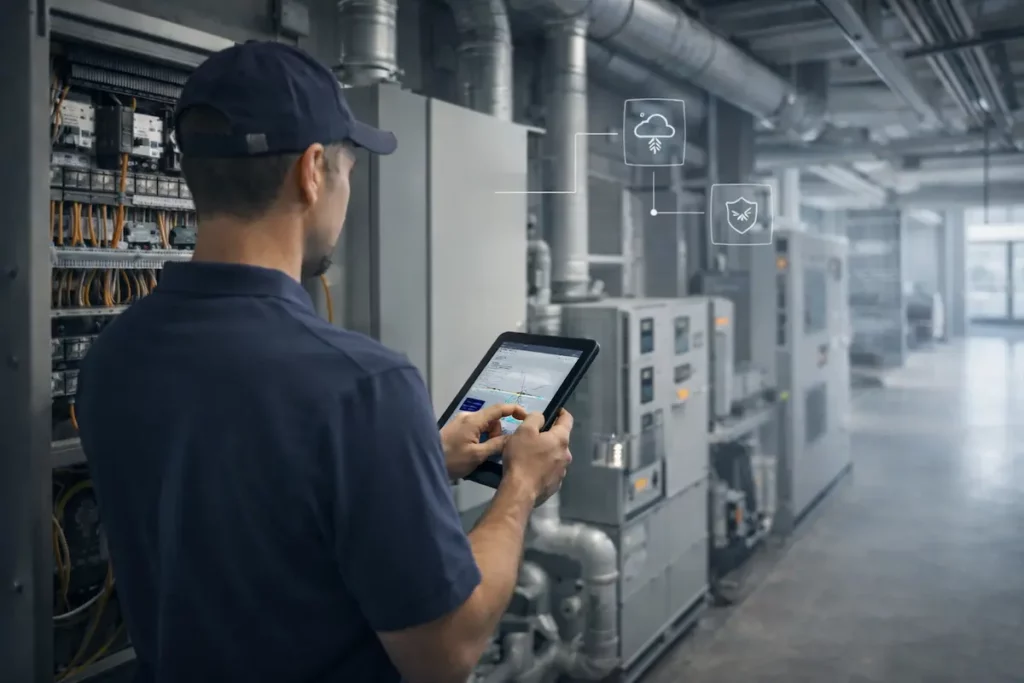
Although energy savings are one of the main benefits, reducing automation solely to this aspect is an understatement. Building automation systems provide value beyond energy efficiency.
- Predictive maintenance: Systems detect anomalies and strange behavior in equipment before breakdowns occur, allowing preventive interventions that reduce downtime. This extends the useful life of the equipment and reduces repair costs.
- Improved security: Automation integrates access control, fire detection, surveillance and alarm systems, providing a safer environment for people and company assets.
- Comfort and productivity: By automatically optimizing climate control, lighting and air quality in real time according to occupancy and external conditions, the comfort of workers and occupants is improved, which positively impacts productivity.
- Regulatory compliance: Facilitate compliance with regulations such as RITE (Thermal Installations Regulation), ISO 50001 and other energy efficiency standards without the need to constantly perform manual audits.
- Operational reliability: Real-time monitoring allows you to react quickly to incidents, minimizing resolution times and ensuring that everything continues to work continuously.
Myth 4: Automating a building means losing manual control of the facilities
A very common misunderstanding is that with building automation and control you lose the ability to intervene manually. In reality, modern systems perfectly combine automatic control with manual control capabilities.
You can program patterns for routine situations, but you always retain the possibility of intervening manually when necessary. For example, in an emergency, special event, or maintenance. Come on, manual control is never lost, it is simply complemented by automation so that everything works correctly on a daily basis.
Myth 5: Integrating heterogeneous systems is impossible and requires changing the entire infrastructure
Another myth is to believe that automating forces you to change the entire installation you already have, and that it is impossible to integrate systems from different manufacturers and old technologies with modern solutions.
But the reality is that modern technology, based on open architectures and flexible APIs, allows systems from multiple manufacturers to be easily integrated. Current platforms function as a translator (middleware) capable of connecting with old systems using standard protocols, centralizing information in a transparent way.
What does this mean? That your previous investment is not lost. You can add automation gradually, component by component, without interruption. Each new element you add is integrated without affecting what already works.
What has changed in building automation in recent years
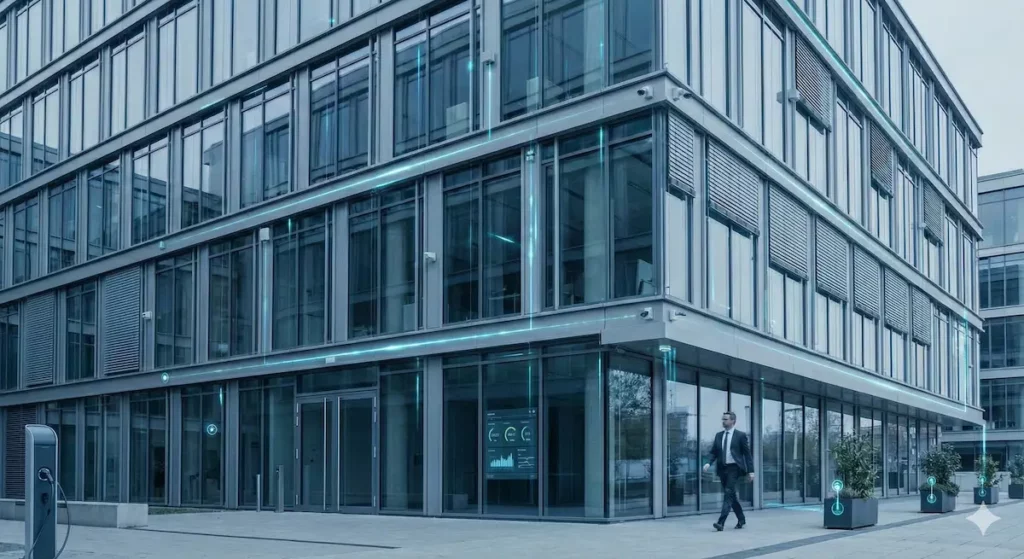
Building automation has undergone a great transformation thanks to new technologies:
- Artificial Intelligence: Systems now use AI algorithms to learn usage patterns, predict energy demands, and automatically optimize facility operation without human intervention. AI detects inefficiencies that previous systems could not identify.
- IoT and advanced sensors: The availability of affordable and connected sensors allows the collection of very detailed data on multiple variables (temperature, occupancy, air quality, energy consumption) in real time.
- Improved interoperability: Modern APIs and open standards facilitate the integration of systems from different manufacturers, eliminating the technological silos that characterize legacy installations. Flexible platforms like OTEA allow you to connect with any existing device without needing to replace legacy infrastructure.
- Digital Twin: The creation of digital twins of buildings allows us to simulate scenarios, predict behaviors and optimize strategies before implementing them in reality.
Integrated sustainability: Modern systems connect automation with carbon footprint reduction objectives, optimizing not only operational costs but also environmental impact.
Building automation as a lever for efficiency and competitiveness
Automation is no longer a technological luxury. It is a necessity if you want to compete and operate sustainably. Solutions like OTEA demonstrate that it is possible to automate in a flexible, integrable way and without unnecessary complications.
Investment in automation of proactive facilities allows companies to evolve toward a centralized control of buildings intelligent, simultaneously reducing operating costs, improving energy efficiency, guaranteeing safety and preparing for future regulations such as UNE 52120 efficiency in buildings.
Understanding these systems in the context of BACS (Building Automation and Control Systems) provides you with the regulatory framework. And the open architecture of modern platforms based on APIs allows for seamless integration with what you already have.
In short, building automation is no longer a technological luxury but a strategic necessity for companies seeking to optimize operations, meet sustainability objectives and maintain competitiveness in markets that are increasingly demanding with energy efficiency.

Recommended for you

You deserve a facility management system that works with you
Request a free demo and discover how other maintenance, sustainability, and energy efficiency teams are achieving real results. No unnecessary complexity. Just a clear roadmap designed to scale with you.




