
EMS BMS and SCADA and how to choose the system you need
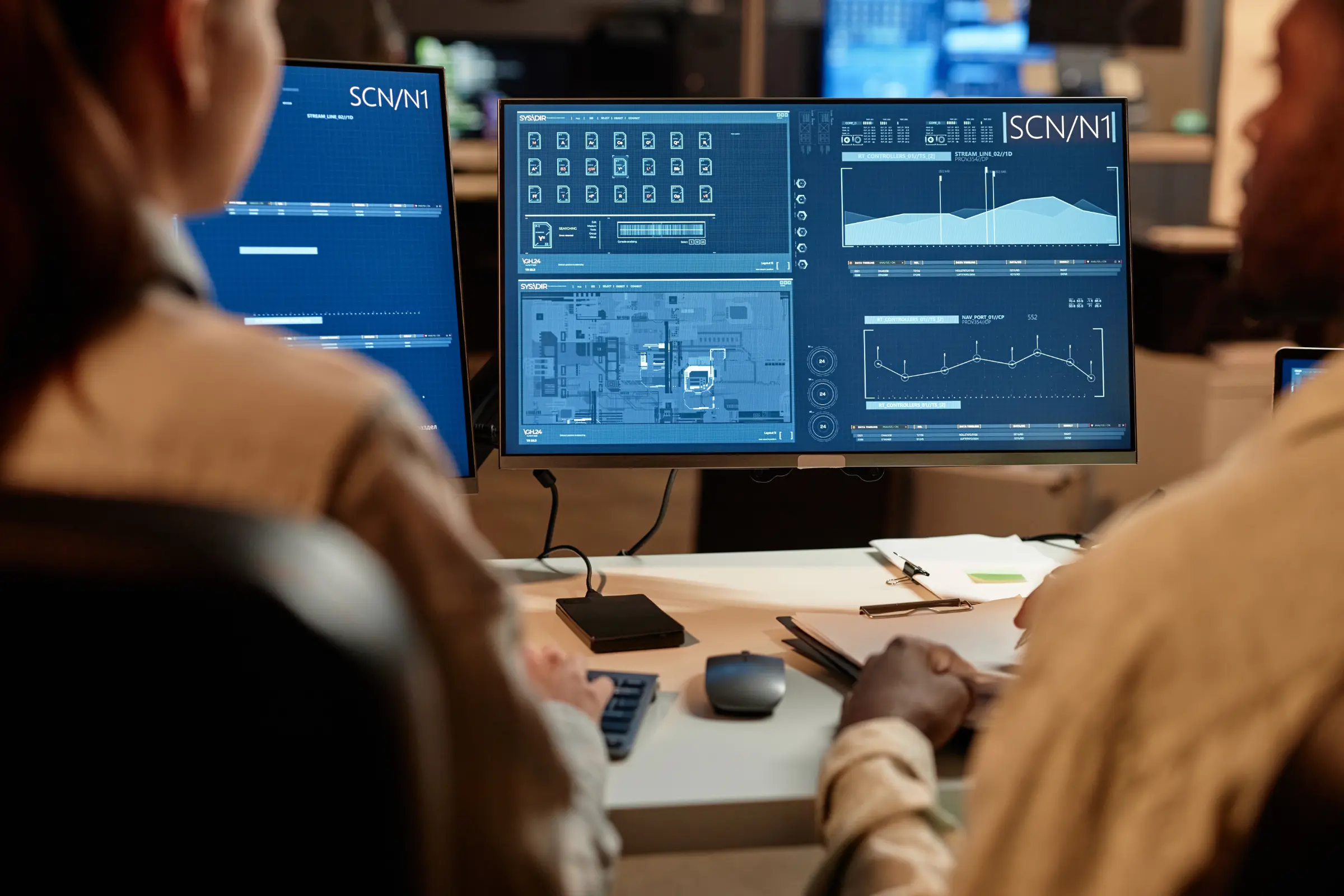
When we talk about automating and managing buildings or industrial warehouses, three names always come up: SCADA, BMS and EMS. Although they are often confused or lumped together, the truth is that each system responds to very specific needs. Of course, they are not mutually exclusive. In fact, the most common thing is that they work together so that everything works in a smarter and, above all, more efficient way.
To choose well, the first thing is to understand that you don’t have to stick to just one. The final decision will depend on the type of installation you have in hand, what you want to achieve with the management and the level of control you need so that both operations and energy consumption are optimal.
What is a SCADA system?
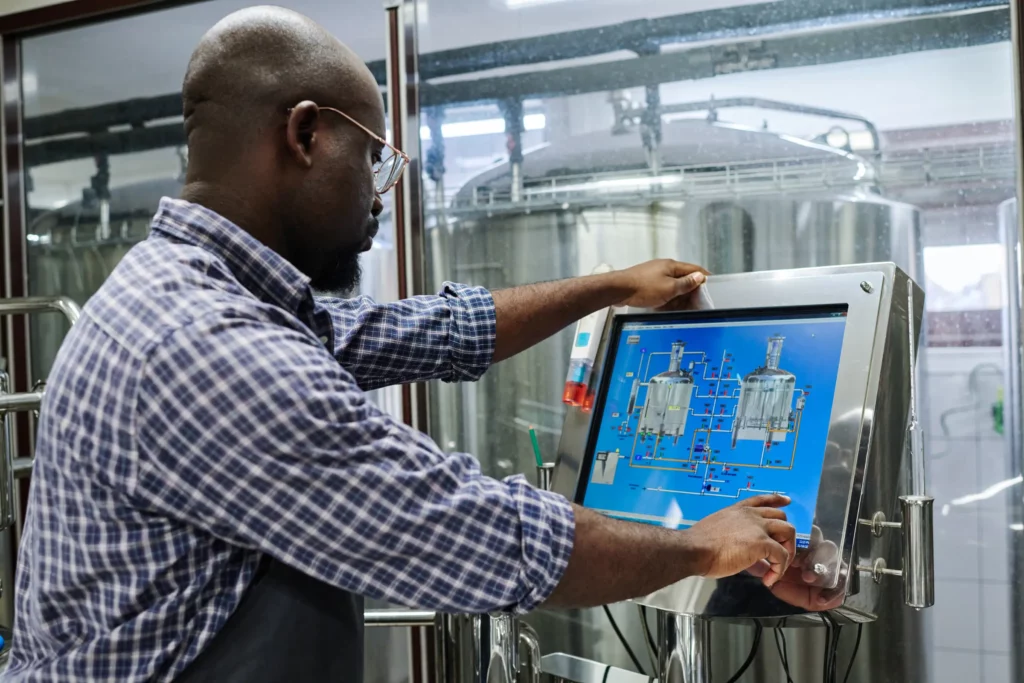
A SCADA (which comes from Supervisory Control and Data Acquisition) is, in short, a system that is used to supervise and control industrial processes remotely and in real time. Imagine a network of hardware and software that allows you to see and manage everything that happens in a factory or production plant from the same control room.
To give you an idea, a SCADA is based on three elements that work in coordination:
- Field devices (such as sensors and actuators) distributed throughout the plant that collect data of all types: temperature, pressure, flow…
- Controllers (the famous PLCs) and RTUs, which are like small computers that collect data from sensors and other devices for processing.
- A human-machine interface (HMI), which is nothing more than the screen where an operator sees all that information and can give orders to control the process.
But in the end, what really defines a SCADA is that it works in real time, giving operators a very clear view of how the machines are performing and allowing them to manage entire production lines. That is why they are so common in industrial environments, such as power plants, factories, water purification plants or in the chemical industry.
What is a BMS (Building Management System)?
Let’s now move on to the BMS or Building Management System. As its name suggests, this is the brain that manages and automates everything that happens inside a building. It is also known as BACS (Building Automation and Control System), and it is nothing more than a combination of software and hardware that is installed to have centralized control of a property.
A BMS gives you the ability to control and view such fundamental systems as:
- Heating and air conditioning.
- The electrical system and all the lighting.
- Hydraulic system and water supply
- The elevators.
- Security systems (fire detectors, access control, surveillance cameras…).
- Even the audio and video systems.
And its strong point is precisely that: unifying the management of all systems on a single platform. This allows you to have a global vision and total control from a single point, making it easy to maximize the comfort and efficiency of your building.
To delve deeper into the functionalities and benefits of this system, you can consult our specialized article on BMS, where we analyze in detail how to implement these solutions.
What is an energy management system or EMS?
Finally, there is the EMS, or Energy Management System. This is software focused exclusively on monitoring, controlling and optimizing how and how much energy is consumed. It is a tool that helps companies better manage their energy performance, establishing efficiency objectives and developing plans to achieve them.
An EMS, basically, what it does is:
- Collect consumption data in real time using sensors.
- Analyze that data to find where you are spending too much or inefficiently.
- Show you all that information in easy-to-understand dashboards and graphs.
- Propose specific strategies to reduce energy waste.
- Allows you to remotely monitor and control devices and systems.
Normally, EMS are based on the PDCA (Plan, Do, Check and Act) continuous improvement cycle and usually follow standards such as the ISO 50001 standard to ensure continuous improvement of energy efficiency.
If you want to know in depth the competitive advantages and practical applications of these systems, we recommend you read our article on energy management platforms, where we explain how they can transform the efficiency of your organization.
Differences between SCADA, BMS and EMS
Although all three seek to automate and be more efficient, they present fundamental differences in their application and operation. Let’s see which ones.
Purpose and objectives
- SCADA: It is mainly designed for industrial processes. Think about production, energy generation, water treatment… Your goal is to have direct and constant control of operations that need constant supervision.
- BMS: Focuses on the complete management of a building. It seeks the comfort of occupants, the efficient operation of building systems, reducing energy consumption and increasing security. Its purpose is to convert a property into a “smart building.”.
- EMS: It is designed for: analysis and optimization of energy consumption. Your job is to detect where the expense occurs, understand what variables influence it and propose measures to save.
Level of supervision and control
- SCADAs work in real time and require a response capacity of milliseconds to control critical machines and processes.
- The BMS also operate in real time, but their objective is different: the automatic control of the air conditioning, lighting or security of a building in a centralized way.
- EMS platforms do not focus so much on direct control, but rather on analysis over time. Its strength is processing historical and current data to find patterns, generate reports and propose energy improvements.
Data and timeframes
- A SCADA handles machinery data (temperature, pressure, status) that is critical and needs it instantly.
- A BMS collects building data related to comfort and operation (ambient temperature, occupancy, system status).
- An EMS works with energy consumption data and its evolution over time. Analyze bills, usage patterns and other efficiency indicators.
Main users
- SCADAs are usually handled by technical operators and industrial engineers who need to control complex processes in real time.
- The BMS are the daily tool of the facility managers and building maintenance technicians.
- And the EMS are designed for energy managers and those responsible for sustainability, whose job is to analyze and reduce consumption.
Cost and technical complexity
- There are notable differences here. A SCADA is usually the most expensive option due to the specialized hardware, software and qualified personnel it requires. Its technical complexity is high.
- A BMS has a more moderate cost and medium complexity. The investment is divided between sensors, controllers and management software.
- EMS platforms are more flexible in terms of price, especially cloud solutions, which greatly simplify installation and management. Its complexity is usually low to medium.
Comparative table: SCADA vs. BMS vs. EMS
| Feature | SCADA (Supervisory Control and Data Acquisition) | BMS (Building Management System) | EMS (Energy Management System) |
|---|---|---|---|
| Main Purpose | Control of critical industrial processes | Comprehensive management of building systems | Analysis and optimization of energy consumption |
| Scope of Application | Industrial plants, energy, water treatment | Commercial buildings, offices, hospitals, hotels | Any organization with high energy consumption |
| Purpose and objectives | Operation and control of machinery in real time | Comfort, safety and efficiency of building systems | Reduction of energy costs and sustainability |
| Level of Control | Direct and real-time control (milliseconds) | Automatic and centralized control of subsystems | Data analysis and recommendations for optimization |
| Type of Data | Process operational data (pressure, flow) | Comfort and building operation data | Energy consumption data, costs and KPIs |
| Typical user | Plant engineers, technical operators | Facility managers, maintenance technicians | Energy managers, sustainability managers |
| Cost and Complexity | High | Medium | Low – Medium (variable) |
Similarities between SCADA, BMS and EMS
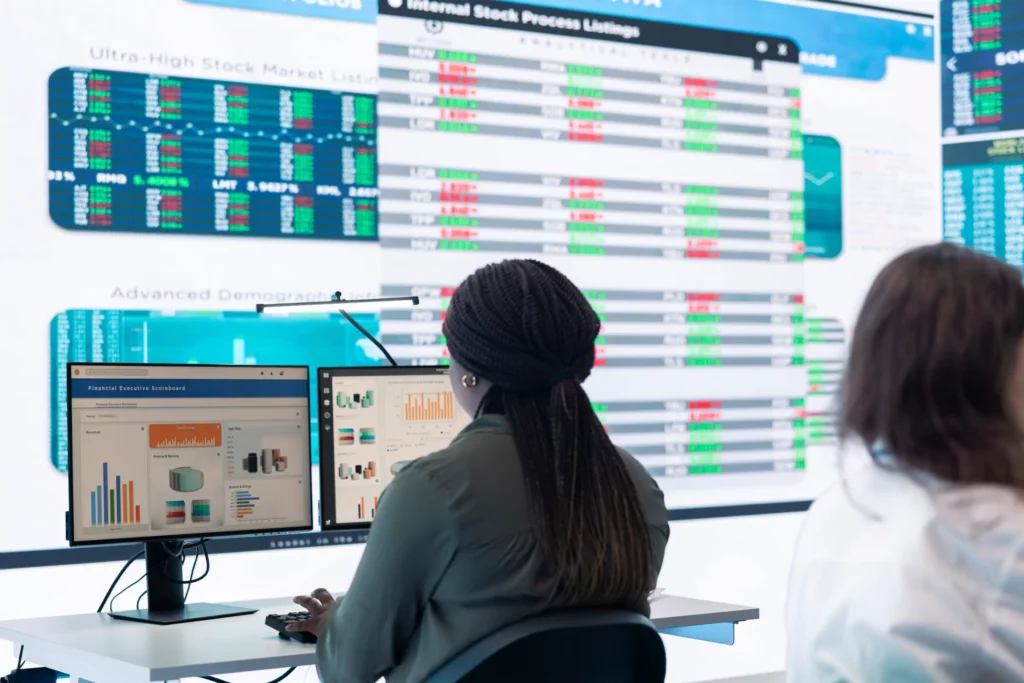
Despite their differences, how are they similar? Well, the truth is that all three share a common base, their objective being to automate and monitor processes to be more efficient.
To achieve this, they all rely on a very similar architecture:
- They use sensors and field devices (including IoT) to collect data directly from the environment, be it a machine, a building or the electrical grid.
- They offer a centralized control platform, that screen where an operator can see in real time what is happening and act accordingly.
For this reason, more than competing, they complement each other. Think of them as a team: modern systems are designed to “talk” to each other and share information. In this way, proactive and very complete solutions can be created, where the factory system (SCADA) notifies the energy management system (EMS) that it will need more power.
In the end, they all give you the tools to make decisions based on real data and not simple intuition.
So when to use each system?
The choice between them is simpler than it seems: it all comes down to what your main objective is.
SCADA: for the control of industrial processes in real time
When are you interested in a SCADA? When you need instant, millimetric control of an industrial process. It is the logical option in:
- Production plants where a small change in temperature or pressure affects quality or safety.
- Energy installations that need constant supervision.
- Chemical processes where safety is the highest priority.
- Infrastructure such as water treatment plants, where the service cannot be interrupted.
In short, if a failure can have serious consequences and response time is critical, you need a SCADA.
BMS: for comprehensive building management
A BMS is your solution if what you are looking for is to centrally manage an entire building. Recommended if:
- You want to improve occupant comfort by automatically controlling the air conditioning and lighting.
- You need to unify the control of many systems (climate, security, elevators) on a single platform.
- You are looking for significant energy savings in a building, which can reach up to 30%.
- You manage properties with areas that need personalized control.
BMS are especially useful in hospitals, corporate offices, shopping centers and hotels where energy optimization and comfort are priorities.
EMS: to optimize energy and sustainability
Go for an EMS if your priority is energy efficiency, savings on bills and sustainability. It is the correct choice if:
- Your company has several sites and you need to compare consumption between them.
- You are subject to energy regulations, such as RD 56/2016 in Spain.
- You are looking to obtain sustainability certificates such as LEED, BREEAM or ISO 50001.
- You have objectives to reduce your carbon footprint and you need to measure and analyze your consumption through management of consumption variables.
An EMS is even more effective when connected to an existing BMS or SCADA, because it leverages its data to enhance its energy analysis and optimization capabilities.
From control to strategic management of your company
Nowadays, with sustainability and efficiency more necessary than ever, knowing how to properly integrate a SCADA, a BMS and an EMS has become a factor that makes the difference. To have truly optimized buildings and industrial processes, it is no longer enough to control; You need a layer of intelligence that gives you the information you need to make better long-term decisions.
At EcoMT/OTEA, what we do is analyze what combination of these technologies each client needs. We create specialized solutions that unite the industrial control of a SCADA, the building management of a BMS and the optimization of an EMS in platforms that adapt to each business.
Our experience allows us to go beyond simple control. We create systems that integrate predictive maintenance to reduce costs, that analyze air quality in offices to improve productivity or that optimize energy consumption in real time to save as much as possible. In the end, it is about stopping reacting to problems and starting to anticipate them. The idea is that operating data stops being just numbers and becomes a useful guide to be more efficient, spend less and, why not, position your company as a benchmark in sustainability and technological innovation.

Recommended for you

You deserve a facility management system that works with you
Request a free demo and discover how other maintenance, sustainability, and energy efficiency teams are achieving real results. No unnecessary complexity. Just a clear roadmap designed to scale with you.




