
How to Monitor a Supermarket Chain’s Cold Chain from One System

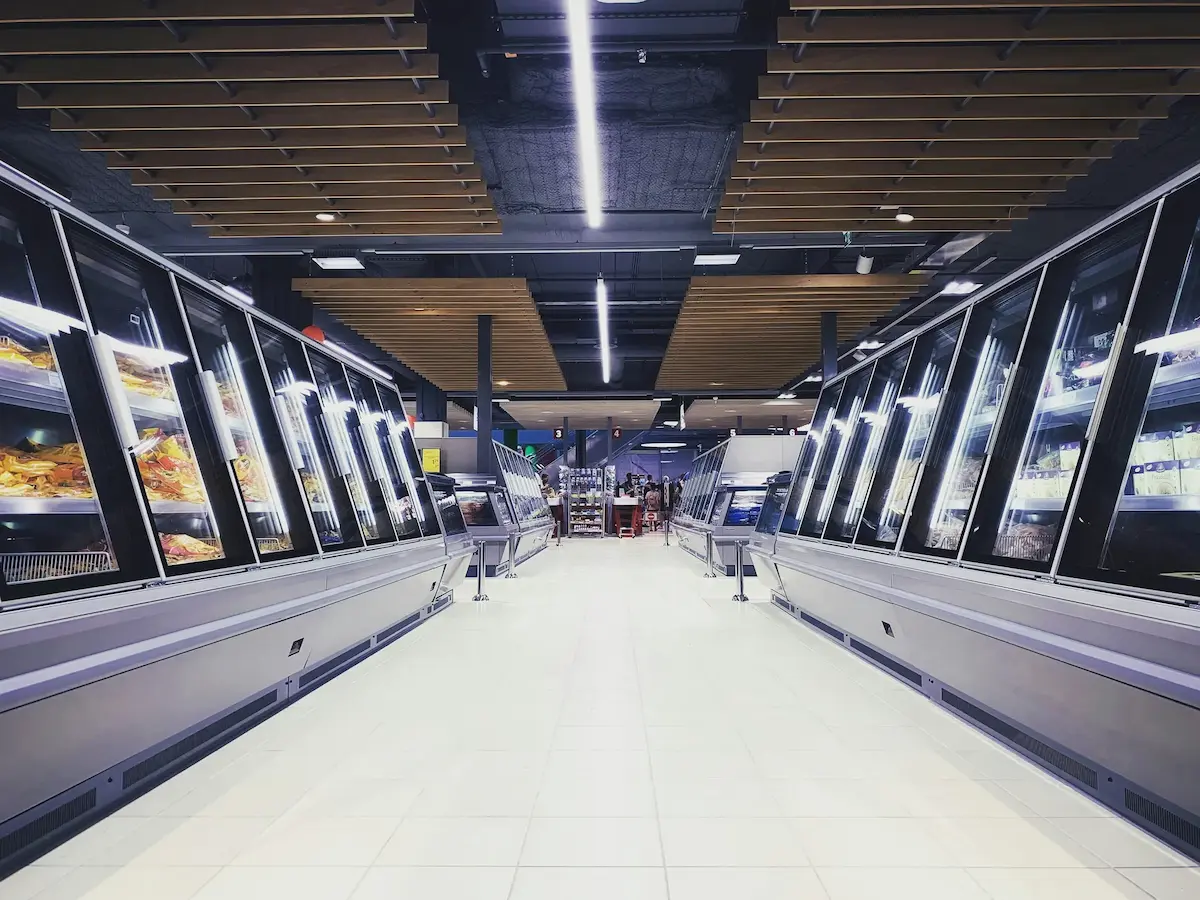
In a supermarket, the cold chain can break in a delivery truck, in a dairy display on a Saturday night, in a freezer room with a door left ajar, or in a central refrigeration plant that stops without anyone noticing until Monday.
How to Monitor a Supermarket Chain’s Cold Chain from a Single System
In a supermarket, the cold chain can break in a truck, in a dairy display on a Saturday night, in a freezer room with a door left ajar, or in a refrigeration plant that stops without anyone noticing until Monday.
And since October 2026, there has been another cause to add: someone remotely accessing the controllers and changing the setpoints. This is what happened in hundreds of supermarkets in France.
When the network has dozens or hundreds of stores, the problem multiplies. Each store has its own display cabinets, cold rooms and refrigeration plants, often from different manufacturers and each with its own software.
In this article, we explain why monitoring refrigeration across a network is so difficult, how much late detection costs, how to connect all the equipment without opening the door to an attack, and how we do this at EcoMT for a chain of more than 200 supermarkets.
Why Is It So Difficult to Monitor Refrigeration Across a Store Network?
The challenge is to measure cold room temperatures across thousands of units at once, with reliable data and someone ready to act when something goes wrong. These are the most common obstacles:
- Mixed brands. Stores are not fitted out at the same time. A chain grows through openings, refurbishments and acquisitions of other brands, and each area has a refrigeration contractor with a preferred manufacturer. The result is Carel, Dixell, Danfoss, Eliwell, Unitronics and Ako refrigeration plants operating alongside display cabinets from different generations and, sometimes, older equipment without a communications port.
- Separate software for each manufacturer. Each controller has its own platform, login and way of displaying data. Checking the network means connecting IP by IP, store by store.
- Paper records. Many stores still write down temperatures on paper twice a day. Hours pass between readings, during which a display cabinet can warm up without anyone noticing. That is why more and more chains are moving from manual logs to automatic monitoring.
- Alarms that nobody sees. Without integration, the alarm appears on the refrigeration plant’s display or in the manufacturer’s software. If it happens overnight or on a public holiday, nobody sees it.
- Food safety obligations. Food cold chain regulations require each product to be kept at its storage temperature and operators to be able to demonstrate this during an inspection. With scattered data, gathering that traceability information for every store is a huge task.
How Much Does Detecting a Fault Too Late Cost?
The cost of a refrigeration fault, such as a refrigerant leak, varies greatly depending on when it is detected:
| Detected late | Detected in time | |
|---|---|---|
| Average cost per fault | Around €9,400 | €2,500 at most |
| Refrigerant gas | Complete leak, full recharge | Partial leak |
| Stock | Product loss | No loss |
| Compressor | Risk of damage from running without refrigerant | No damage |
| Intervention | Emergency callout | Scheduled repair |
The difference, more than €5,500 per fault, comes almost entirely from the hours that pass between the equipment starting to fail and someone noticing. That is why the key question is not whether a store will experience faults—it will—but how long it takes the network to find out.
In a chain of 219 stores, reducing that time cut annual expenditure on leaks by €55,000 in a single year (we explain this in the case study below).
How Can You Connect Equipment from Any Manufacturer Without Opening the Door to a Cyberattack?
On the night of 11–12 October 2026, a cyberattack of unknown origin disrupted refrigeration in at least 400 French supermarkets: more than 100 belonging to Coopérative U and around 300 belonging to Intermarché and its Netto brand, according to AFP. The attackers remotely accessed the refrigeration control systems and forced continuous defrosting, the function normally used to remove frost from evaporators.
Instead of cooling, the display cabinets and cold rooms reached 50 °C. Intermarché’s units remained at that temperature for six hours, and the company had to discard all the products to avoid food safety risks. Losses run into millions of euros, and French prosecutors have opened an investigation that also includes several fires in stores.
The manufacturer of the affected controllers explained that the equipment was running outdated software and that it had been recommending updates to its customers for some time. In other words, the problem was not refrigeration itself, but how the systems controlling it were connected and maintained.
The lesson is uncomfortable: connecting refrigeration equipment to the internet so you can monitor it remotely also allows others to reach it if the connection is not properly designed. And the risk increases when every manufacturer, maintenance provider and subcontractor has its own remote access to the refrigeration plants.
Sensors and Control Systems in Each Supermarket
Each store has two data sources:
- Refrigeration plant controllers, which regulate pressures, starts and defrost cycles and generate their own alarms (high and low pressure, compressor failure, out-of-range temperature).
- Probes in display cabinets and cold rooms, usually using radio frequency, which measure actual product temperature in multideck displays, chest freezers and refrigerated counters, alongside door-opening sensors in cold rooms.
Other signals that are very useful for refrigeration can be added, such as the plant’s electricity consumption measured by a dedicated power analyser or the ambient temperature of the sales area.
Control Panel with a PLC and IoT Gateway
This is the core of our BMS and the only point through which data leave the store. Equipment is connected as follows:
| Connection | How it connects | When to use it |
|---|---|---|
| Ethernet | Direct cable between the equipment and the control panel’s switch, usually through a gateway such as Televis GO | Controllers with network connectivity |
| RS-485 bus (Modbus RTU) | The refrigeration plant is wired into one of the control panel PLC’s buses | Controllers with an RS-485 port |
| Protocol conversion gateway | A device enables communication with a refrigeration plant that lacks it, allowing it to be added to the bus | Older plants or those without an open protocol |
Data Logger
If the store loses internet access, data continue to be stored and are uploaded to the platform when the connection is restored, so it is always possible to reconstruct what happened during the outage.
Cloud Platform for Centralising All Sites
Data from all stores reach a cloud platform that standardises them. From there, teams can check real-time status, browse historical data, compare stores and download reports.
This design reduces the attack surface in several ways:
- Refrigeration plants are not exposed to the internet. They communicate with the store’s control panel, not with the outside world.
- A single integrator instead of separate access for each manufacturer. Fewer open doors and one clearly accountable party responsible for maintaining them.
- Monitoring does not require remote control. Many chains prefer read-only access to data, leaving regulation to the controller and the refrigeration contractor. If remote control is enabled, each chain decides which commands are permitted and who can issue them.
- Measurement independent of the controller. Separate probes measure product temperature even if the controller reports something else. If someone tampers with a refrigeration plant, the temperature rise remains visible.
- Eyes on the entire network. If several stores start warming up at the same time, the Control Center sees a pattern rather than isolated faults.
How Can You Monitor and Manage the Entire Network from One Place?
OTEA is a data lake that connects everything that can be connected: refrigeration, HVAC, lighting, energy or any other machine in the store. For the cold chain, it acts as temperature monitoring software for cold rooms and the entire network: it records each store’s parameters every 15 minutes and organises all refrigeration plants in the same way, under Refrigeration plants › Manufacturer › Plant, with three views:
- Variables dashboard: plant signals with their current values and a graph covering the last few hours. Active alarms and compressor operation are visible at a glance.
- The same format for every brand: a Dixell plant is read in the same way as a Carel plant.
- Historical graph: any variable can be plotted over time, combined with others and downloaded.
Every reading is stored and can be searched by refrigeration unit, store and period. This helps demonstrate compliance with the HACCP temperature monitoring plan, with an inspection-ready report for each unit, and helps explain a fault: whether it is a one-off or recurring issue, and whether it affects one unit or the entire refrigeration plant.
In OTEA, you define which variable to monitor, its threshold, the monitoring schedule and the notification channel (email, SMS, WhatsApp or Telegram). Some rules come directly from the equipment, while others are created by combining signals. For example:
- Send an alert if the refrigeration plant consumes less than 1 kWh over 30 minutes, because it has probably stopped.
- Detect a plant consuming more than usual without a change in demand, an early sign of a fault or leak.
- Combine ambient temperature with controller data to better adjust multideck displays affected by heat in the sales area, such as dairy displays.
Who Filters the Alarms So They Don’t Overwhelm You?
An alarm without a protocol is noise. Our Control Center is a technical team that monitors the network 24/7, applies the protocol agreed with each client, filters false positives, escalates notifications and does not close an incident until it is resolved. It also analyses unusual patterns, such as excessive defrosting or irregular cycles, and prepares maintenance and energy reports.
Two Alert Levels for Each Refrigeration Service
| Service | Warning threshold | Activation | Critical threshold | Activation |
|---|---|---|---|---|
| Frozen products (chest freezers, multideck displays, cold rooms) | -15 °C | 3:00 h | -13 °C | 1:30 to 2:00 h |
| Chilled multideck displays (dairy, deli) | 9 °C | 2:30 h | 11 °C | 2:00 h |
| Meat (self-service multideck display, refrigerated counter, cold room) | 7 °C | 2:30 h | 9 °C | 2:00 h |
| Fruit and vegetables | 11 °C | 2:30 h | 13 °C | 2:00 h |
Values from one of our clients.
A technician reviews the warning alert before sending a notification. The critical alert is sent automatically to the store and maintenance team and is not paused.
What Does the Technician Check Before Notifying the Store?
- A display cabinet’s temperature rises: the store is asked to check that the probe is in place and take a thermometer reading. If confirmed, the refrigeration contractor is notified.
- A cold room’s temperature rises: the reading is cross-checked against the last door opening. If the door has been open for less than 30 minutes or the room is recovering, no notification is sent.
- Several refrigeration services are affected at once: they are grouped into a single urgent notification. The most likely cause is that the refrigeration plant has stopped or the power supply has failed.
- Temperature rises during the day but cools properly at night: the cabinet cannot cope with the load from repeated opening; the refrigeration contractor is notified.
- Temperature drops: there is a risk of products freezing, or stock may be covering the probe.
- Abnormal defrost cycles: more than 45 minutes or intervals of less than 4 hours. This goes to maintenance, not the store.
- A chest freezer switches off when the store alarm is armed: it is plugged into a socket on the lighting circuit.
Other Alarms That Affect the Cold Chain
| Alarm | Rule | Recipient |
|---|---|---|
| Plant variables (protective devices, faults) | Event module | Maintenance |
| Loss of communication with the plant | Automatic rule | Maintenance |
| Temperature unchanged for more than 24 h | Indicates a failed probe or depleted battery | Energy manager and maintenance |
| Cold room door open | More than 15 min: store; more than 3 h: manager | Store / manager |
| Control panel in manual mode for more than 1 h | Event | Store |
If the alert persists after the first notification, a reminder is sent to the store; on the second notification, it is escalated to maintenance; from the third day, it is reviewed every 3 days and then every 7 days until resolved. Maintenance reviews the refrigeration services with the most alerts each week.
Case Study: 219 Supermarkets and 4,500 Refrigeration Units Monitored
A supermarket chain in northern Spain, with three brands, connected its stores to a centralised system with three objectives: ensure product preservation in cold rooms and refrigerated display cabinets, reduce energy consumption and improve comfort.
What was integrated? Refrigeration plants from several manufacturers, temperature probes in multideck displays, chest freezers and refrigerated counters, cold room temperatures and door openings, and plant electricity consumption measured by a dedicated analyser. All under the Control Center’s alert protocol.
Result: annual leak repair costs fell by 20%.
- August 2023 (starting point): around €31,000 per month.
- December 2025: around €16,000 per month.
- 2024: around €281,000. 2025: around €226,000. €55,000 less in one year.
- The monthly average fell from around €23,400 in 2024 to around €18,800 in 2025.
And because OTEA integrates the entire store, not just refrigeration, the same chain saved 2,668,751 kWh across its stores during the first year of the project.
When Should We Implement a Centralised System?
These are the signs that the network already needs one:
- You have more than a handful of stores and nobody can see their refrigeration status at a glance.
- Refrigeration plants and controllers from several manufacturers coexist, each with its own software.
- HACCP temperature records are still completed by hand.
- Faults are discovered when the store opens or when a customer complains.
- Leak repair and lost stock costs increase every year, and you do not know which stores account for them.
To begin, we recommend creating an inventory of the equipment in each store (manufacturer, controller, refrigerant, refrigeration contractor and whether it has a communications port), defining critical alarms and their protocol before connecting anything, and starting with a pilot involving a few stores with different brands. That is how the chain in this case study did it: pilots, first phase and then rollout.
Want to see the cold chain across all your stores on a single dashboard? In a demo, we will show you what your stores would look like in OTEA, whatever equipment you have, and which alarms you could start monitoring from day one.
Recommended for you


You deserve a facility management system that works with you
Request a free demo and discover how other maintenance, sustainability, and energy efficiency teams are achieving real results. No unnecessary complexity. Just a clear roadmap designed to scale with you.



