
IEA Spain 2026 Report: Key Findings and Practical Takeaways From EcoMT

The International Energy Agency (IEA) has published its 2026 review of Spain’s energy policy. The overall assessment is positive: between 2015 and 2025, Spain more than doubled its renewable energy capacity to approximately 119 GW, and renewables generated 56% of its electricity in 2025.
The report also highlights a major challenge for Spain: how energy is managed at customer sites.
A lot of solar power in a short window
Between 2021 and 2025, Spain installed more than 47 GW of solar photovoltaic capacity. In 2025, solar accounted for more than 90% of new renewable capacity, with generation concentrated around midday.
According to the IEA, a system in which nearly all new capacity is solar risks increasing curtailment and driving down prices during those hours. Technical curtailment of renewable generation—the energy that cannot be used because of grid constraints—reached 11% in July 2025. In April 2026, it remained around 3.5%, more than three times the level a year earlier.
Flexibility on the demand side, too
For the IEA, flexibility is central to Spain’s electricity policy in the coming years. Alongside storage and interconnections, the agency points to demand-side measures, including smart vehicle charging, aggregation, and industrial load management.
Spain is lagging in this area. It has approximately 2 GW of explicit demand response, compared with more than 4 GW in both France and Italy. Most of the 0.9 GW of batteries installed as of May 2026 are behind the meter—in other words, at business and residential sites.
The IEA also notes that many small and medium-sized enterprises and industrial businesses lack the scale or capabilities to participate in flexibility markets. Before participating in any market, each facility needs to be able to decide when to consume electricity, when to charge, and when to discharge.
The IEA makes the same point globally. In its Renewables 2026 report, it considers demand flexibility just as important as batteries and notes that it can be implemented quickly. It also adds that digital technologies, including artificial intelligence, can help shift consumption to periods when renewable energy is abundant.
What a facility with solar PV can do
A building, logistics center, store, or industrial plant with solar PV has its own peaks and valleys. Solar generation arrives around midday, consumption does not always align with it, and electricity bills penalize peak demand. With control over equipment, several strategies become possible. For example:
- Peak shaving with batteries and inverters. Inverters and batteries come with factory-set operating modes. When they are controlled through a dedicated platform, each customer can define when the battery charges, when it discharges, and what power limit applies, based on their electricity rate structure, operating schedule, and actual consumption. This allows customers to manage peak demand according to their own criteria, rather than relying solely on the manufacturer’s settings.
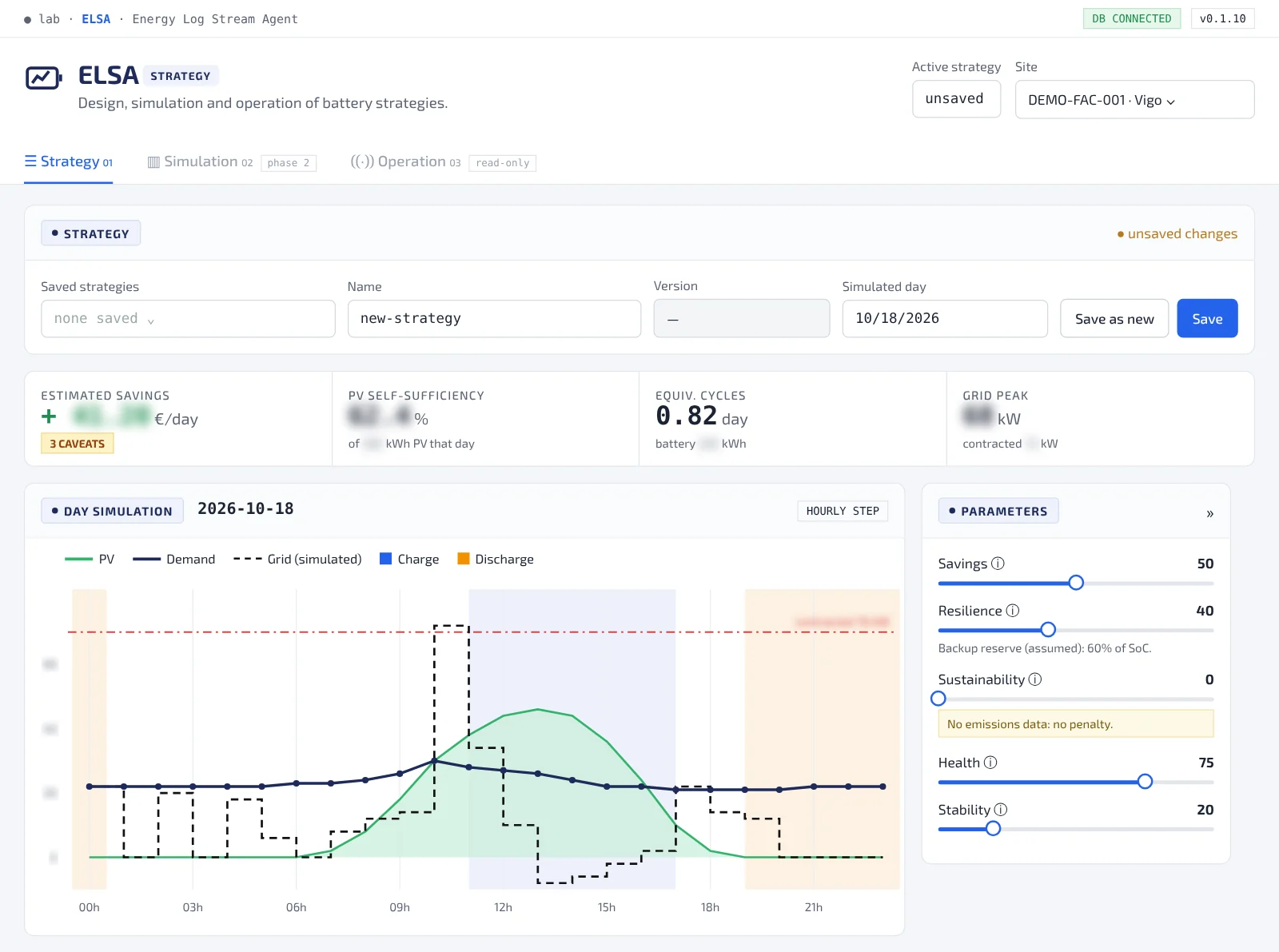
- Thermal storage with zero grid export. Some facilities with large solar PV systems cannot or choose not to export electricity to the grid. In these cases, the midday surplus can be used to pre-cool cold rooms or the building, within their permitted temperature ranges. That stored cooling meets part of the afternoon demand, when solar generation has ended. It is a way to store energy without batteries.
Neither strategy is right for every facility. The choice depends on the electricity rate structure, facility type, allowable product temperature ranges, and each company’s priorities, which may include cost, emissions, or comfort.
EcoMT’s approach to making use of surplus solar energy
At EcoMT, we design systems that allow each customer to implement their own energy strategy. We do this according to four criteria.
- Tailored to each facility. A supermarket does not have the same needs as a hospital or a solar power plant. We therefore design the control panel and configure OTEA, our facility management platform, so each customer can monitor and control what matters most at their site.
- Manufacturer-independent. We integrate Delta, ABB, Siemens, and Schneider Electric PLCs; BMS platforms such as Niagara; computerized maintenance management systems (CMMS) for maintenance tasks; Carel, Danfoss, and TelevisGo refrigeration controls; and Huawei, Sungrow, and SMA inverters into the same system. We use standard protocols such as Modbus, BACnet, KNX, LoRaWAN, OCPP, and DALI, along with the control panel’s inputs and outputs. With more than 350 supported device and system models, customers can change their inverter, battery, PLC, or supplier without losing control of their facility.
- Cybersecure. We install OTEA Edge at each site to connect inverters, batteries, and HVAC equipment to OTEA through a single encrypted outbound connection.
- Scalable. We begin each project with a proof of concept (PoC) or pilot, which we treat as an engineering trial. It includes predefined objectives, integration with the facility’s actual equipment, and a results report that we validate with the customer before proceeding. The PoC confirms that communications, automation, and remote control work with the equipment installed on-site. It also documents a configuration that can be replicated across other locations, accelerating deployment and reducing integration risks, even when multiple suppliers are involved.
ELSA: battery management based on each customer’s strategy
At sites that combine solar PV, battery storage, and a generator, ELSA—the application we developed on OTEA—recommends when to charge the battery, when to discharge it, when to limit grid exports, and when to export electricity. It follows the customer’s chosen criteria, whether focused on savings, sustainability, or resilience, and combines generation, consumption, weather forecasts, and grid conditions to recommend a strategy.
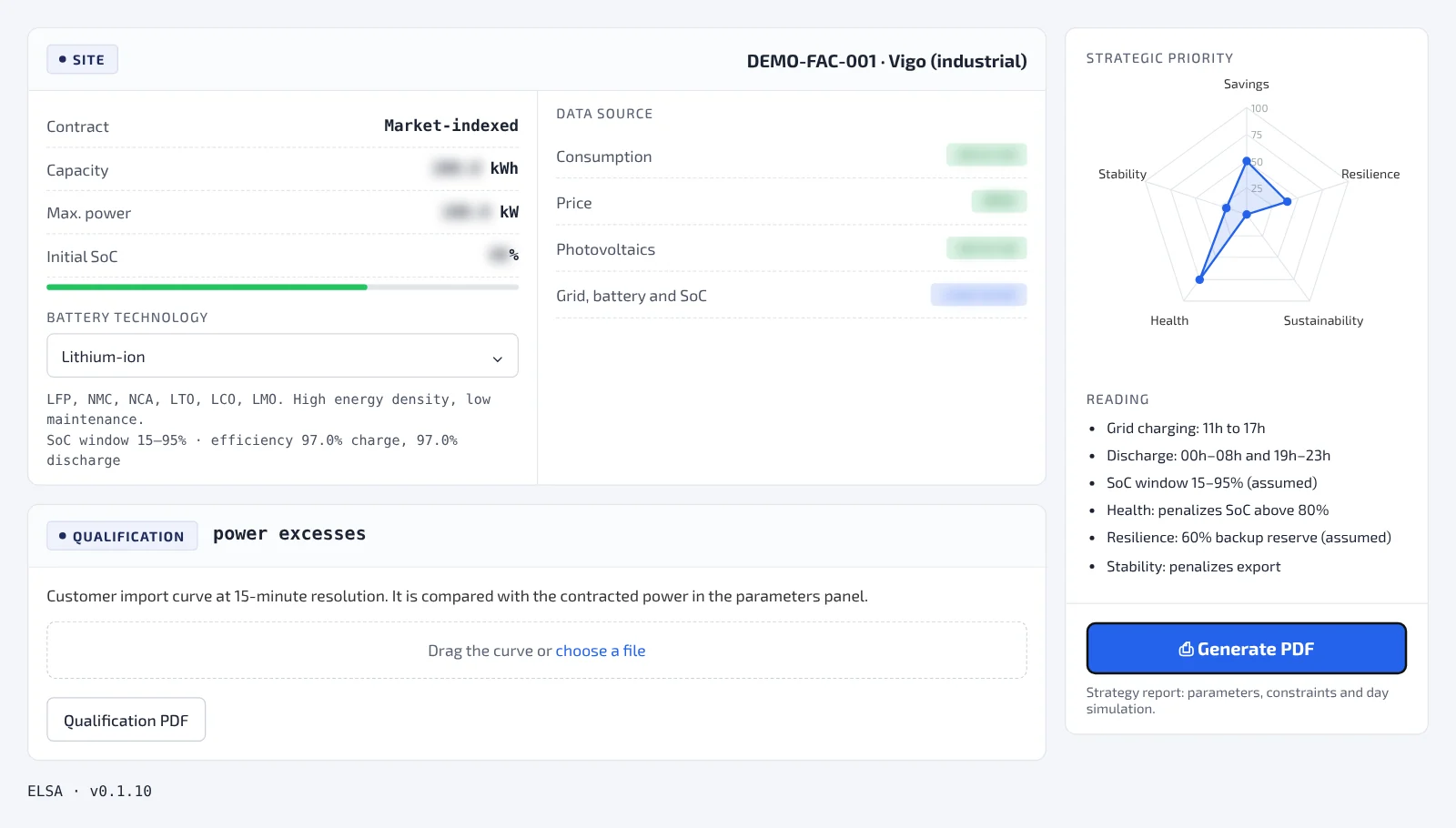
Each customer can then test a strategy, measure the results, and change it whenever they choose, using a system that operates in real time.

Recommended for you


You deserve a facility management system that works with you
Request a free demo and discover how other maintenance, sustainability, and energy efficiency teams are achieving real results. No unnecessary complexity. Just a clear roadmap designed to scale with you.




