
What is an EMS and how does it work?

The term EMS is probably familiar to you. In short, EMS comes from the English Energy Management System and defines the technology that maintenance and energy managers are using right now to optimize the performance of their facilities and guarantee total control over consumption.
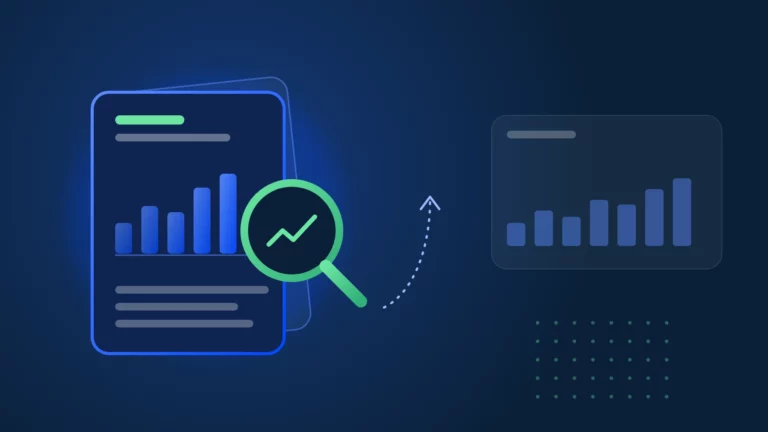
An EMS is nothing more than an energy management platform focused on four key functions: data capture, analysis, control and reporting. What for? Well, to collect all the data generated by your facilities and transform it into clear information to make decisions. This technology allows you to do total monitoring and energy management, giving you exact data in real time about the consumption of your buildings, industrial warehouses or that chain of stores that you manage. And be careful, with an EMS you not only monitor what you spend, it also allows you to adjust consumption based on real data to cut unnecessary expenses and ensure that operational efficiency is not just a pretty phrase in a report.
What exactly is an EMS or energy management platform?
An EMS is a flexible and intelligent ecosystem that connects the hardware and software of each site you manage (whether buildings, stores or warehouses) so that your facility management or energy team works better. In practice, it is the technological layer that makes truly proactive facility management possible.
The interesting thing about an EMS is that it allows your teams to work remotely, centralized and much more agile. You can automate heavy tasks, start machines remotely, simulate how much your electricity bill will cost, make predictions or detect a breakdown before it occurs. It’s a huge list of features, but the bottom line is that your team saves time and you save money.
In addition, a modern energy management system goes far beyond simply “controlling.” It offers you detailed energy consumption analysis so you can see usage patterns, find where you’re wasting your money, and make decisions based on real data, not intuition. This analysis capability is what makes an EMS a comprehensive operational and energy efficiency platform.
Today, IoT allows us to connect more and more devices using protocols such as MQTT or Modbus. This connectivity is essential to achieve effective energy control and management that is noticeable in your pocket, no matter what size you are.
How does the system work?
To give you an idea, an EMS works through an integrated architecture of three main layers that work in a coordinated manner:
Data capture layer
At the base of everything you have IoT devices, sensors and smart meters. These are the ones that are collecting real-time information about the energy consumption of all your equipment. They measure everything from electricity consumption to temperature, humidity, air quality, water or gas flows… and any other parameter that is relevant to energy management.
Processing and analysis layer
That data travels to the central platform, where rules, thresholds and statistical analytics are applied to process the information and turn it into something useful for your team. This is where the crux of the matter is: the system identifies consumption patterns, detects anomalies, compares performance between facilities and generates actionable insights. In more advanced projects, this layer can incorporate predictive models and Artificial Intelligence algorithms to anticipate behaviors and further refine energy optimization. In addition, it is responsible for storing historical data, which is vital for analyzing long-term trends.
Display and control layer
In the end, all this processing and analysis translates into intuitive interfaces. From there you can view custom dashboards, receive automatic alerts, generate reports and, most importantly, take remote control actions over your facilities. You can activate or deactivate equipment, adjust operating parameters or set operating schedules.
Thanks to this layered architecture, you go from having loose data to having a complete and actionable vision of your facilities.
The workflow is continuous: data is constantly captured, processed in real time and gives you an up-to-date view of the status of your facilities. This continuous monitoring allows you to react quickly to any deviation and optimize building energy consumption proactively.
And an important detail: a modern EMS like OTEA has a great integration capacity. It can connect perfectly with your native apps, external software such as SCADA, ERP, CRM or GMAO, as well as programmable controllers and all types of IoT devices. This flexibility ensures that you can leverage your existing infrastructure while adding new management capabilities.
Advantages of an EMS
Forget about rigid solutions. Here we are talking about a platform that can take any form you need to manage your facilities. An intelligent energy monitoring system offers you solutions that directly impact your bottom line.
Save costs immediately
Let’s be honest, one of the biggest benefits is cost savings. Automating your facilities and being able to manage them from an energy management platform like OTEA means savings month after month on your electricity, water or gas bills.
Companies that implement an EMS report savings ranging between 15% and 30% in their energy costs during the first year. This savings is achieved through energy optimization of equipment, elimination of phantom consumption and better planning of operating hours.
Improve control over your facilities
Once your installations are automated you need a place from which to check that everything is working correctly. Create maps, variable dashboards and graphs to monitor the status of your equipment in real time.
In addition, you can monitor operating schedules, upload documentation such as electrical diagrams, work orders or manuals. You can even configure operating rules on one controller that take into account the information collected from another (for example, turning on the air conditioning to extract stale air when the CO₂ concentration exceeds 1,200 ppm). This level of control allows you to make informed decisions based on real-time data, not assumptions or outdated information.
Save time on repetitive tasks
With workflow automation your team will not have to worry about operating hours and will create reports to comply with current health regulations in a matter of minutes.
Repetitive tasks that previously consumed hours of manual work are now executed automatically: switching equipment on and off, generating periodic reports, alerting about anomalies, and much more. This frees your team to focus on higher value-added tasks. Furthermore, by detecting abnormal behavior in consumption and operation, an EMS helps you reduce breakdowns and better plan the maintenance of your facilities.
It adapts perfectly to your facilities
The integration capacity that a platform like OTEA has is one of the most interesting advantages if you are looking for a solution that lasts over time.
Connecting the hardware and software you want means you can choose the features that best suit the energy and operational management of your business. Plus, the more you integrate, the more information you will have available in OTEA.
This flexibility is especially valuable for growing companies or companies with heterogeneous facilities. You don’t need to change your entire infrastructure: the EMS adapts to what you already have and grows with you. In the coming years, your business will evolve with the platform and you will not need to change solutions; If the energy complexity of your business increases, you will simply integrate more functions into OTEA: a new building management system, a photovoltaic installation or an energy performance certification tool.
Streamline regulatory compliance
Collecting data to comply with current regulations that affect your business is not always easy. An energy management platform makes it easy to follow rules and regulations. Being an integrated tool, you can easily export data or create variable dashboards with the information you need.
For example, temperature control is one of the requirements of the food industry’s HACCP system. With an energy management platform you can download all the temperature data of your machines in a matter of minutes or use automated summaries to streamline audits and controls.
Have sustainability indicators
Sustainability is no longer optional for Spanish companies and more and more companies need to have reliable indicators. Energy savings translate directly into CO₂ emissions that do not reach the atmosphere.
An EMS allows you to calculate your carbon footprint accurately and reduce your company’s emissions through data-based strategies. This is essential to comply with the Sustainable Development Goals and the increasingly demanding ESG requirements demanded by investors and clients.
If, in addition, you have opted to integrate self-consumption systems in your facilities, OTEA includes a module to certify with blockchain your energy consumption and the amount of energy generated by your photovoltaic or small wind systems.
Decision making based on real data
One of the most valuable assets that an EMS provides you is the ability to make strategic decisions based on accurate energy consumption analysis. You no longer need to rely on estimates or intuition: you have concrete data on which equipment consumes the most, at what times and what the real cost of each operation is. This information allows you to prioritize investments in energy efficiency, identify opportunities for improvement and justify optimization projects with calculated ROI. These benefits apply to both retail and industry, hotels, healthcare, logistics or education, always adapting to the particularities of each sector.
How is an EMS different from a BMS?
An energy management platform (such as OTEA) differs from a BMS in key aspects: while a BMS is designed for the technical control of a specific building (air conditioning, lighting, security) with local logic, an EMS is oriented to the energy management of multiple facilities in a centralized manner.
The EMS integrates centralized intelligence to compare performance between sites, benchmark between sites, measure and verify savings (M&V) and generate advanced energy reports for the entire portfolio. In addition, it has a much greater integration capacity, connecting with external software such as SCADA, ERP, CRM or GMAO.
In summary, while a BMS focuses on the technical control of a building, an EMS offers you a global energy vision of all your facilities and their economic impact.
If you want to delve into the specific differences between these technologies, you can consult our detailed article on differences between EMS, BMS and SCADA.
When it makes sense to optimize energy management with an EMS
In general, any company whose operation has improved with a BMS or a SCADA can benefit from an energy management platform. This includes companies that have large infrastructure such as: office buildings, factories, production plants, shopping centers, retail chains, hotels, funeral homes, hospitals or educational centers.
To make sure an energy management platform like OTEA is for you, answer these questions:
- Are you responsible for large facilities or infrastructure?
- Do you need to comply with energy policies, health standards or sustainability plans?
- Are you looking for how to save on the electricity bill for your facilities?
- Don’t you have all the information you would like about everything that happens in your facilities?
- Do you think it is difficult to make decisions based on data?
- Do you manage multiple facilities and need a centralized view?
- Do you need to report sustainability indicators or comply with ESG criteria?
If you answered “yes” to any of these questions, it is very likely that an energy management platform is a good investment for your company.
Implementing an EMS makes special sense when you seek not only to control, but also to continuously optimize your energy consumption of buildings and facilities. The investment is quickly amortized thanks to energy savings in installations, typically in a period of 18 to 36 months, depending on the size and complexity of your operations.
In addition, an EMS prepares you for the future: energy regulations are increasingly demanding and companies that do not have robust energy monitoring and management systems will have difficulties meeting regulatory requirements and competing in a market that increasingly values efficiency and sustainability.
Do you want to know more? Discover how OTEA’s smart energy management platform works. Schedule a free tour with one of our specializts to analyze together a real case of your company.

Recommended for you

You deserve a facility management system that works with you
Request a free demo and discover how other maintenance, sustainability, and energy efficiency teams are achieving real results. No unnecessary complexity. Just a clear roadmap designed to scale with you.




